Stormwater Trenching
Accurate trenches for stormwater pipes and pits, excavated to design depths and grades and prepared for bedding, so drainage systems perform properly from the very first heavy rain.
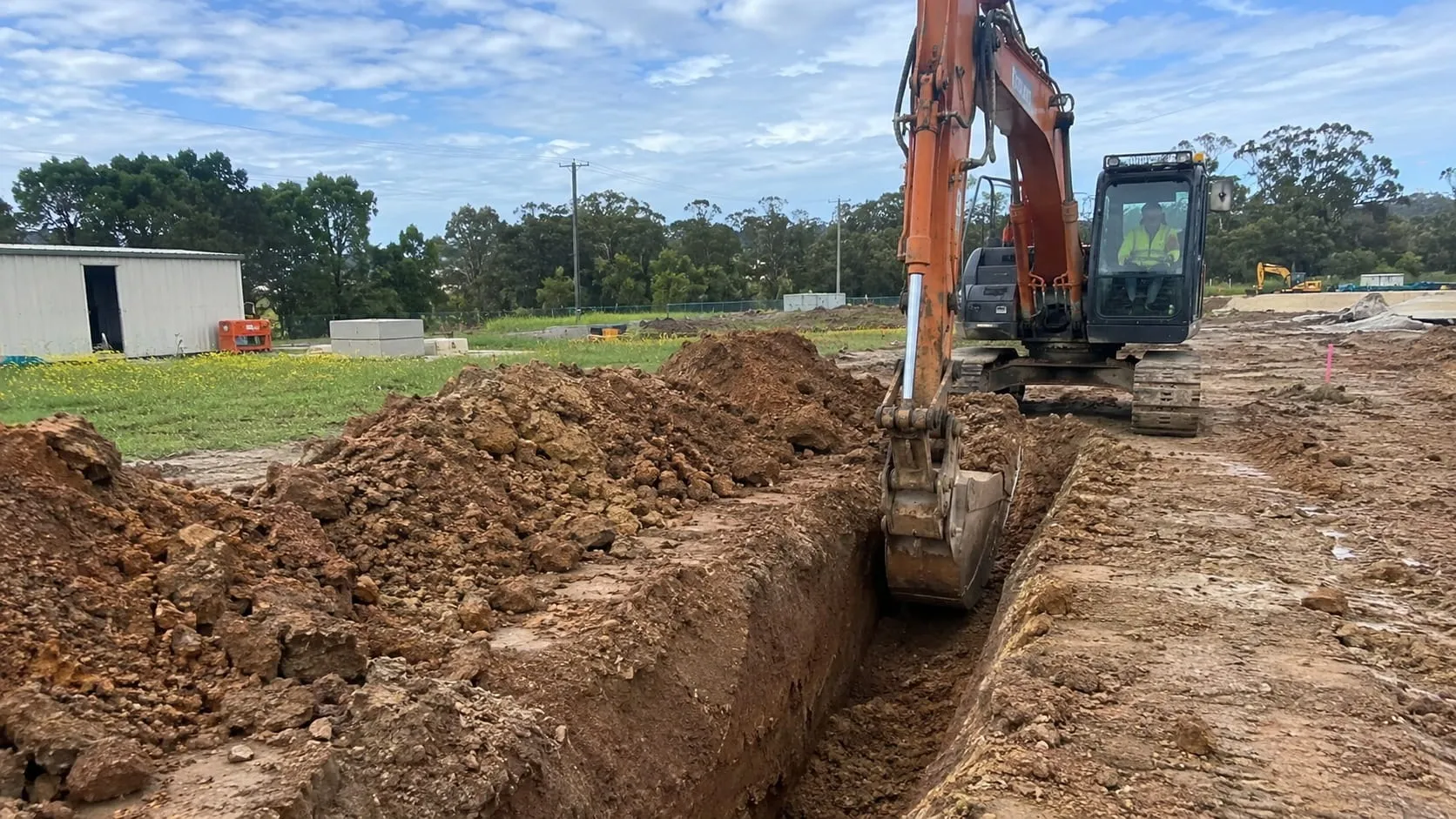
Trenching for drainage, services and footings, cut cleanly and to the correct grade.
Trenching in Dunedin supports stormwater, sewer, water, power and communications projects, and it must be completed safely, accurately and with minimal disruption to neighbours and traffic. We excavate trenches to design depths and grades, using shoring where required and locating existing services before work starts. Dunedin's rock, clay and sloping ground demand the right machines and methods, and our own fleet helps us keep projects moving efficiently.
Bedding, pipe laying support, backfill and compaction are completed carefully so trenches perform properly and surfaces do not settle later. We also manage traffic, spoil and reinstatement, leaving sites tidy and ready for final surfacing. We take care with spoil, groundwater and neighbouring property, keeping every trench stable and every site safe, tidy and organised.
The result is safe, accurate trenching that supports reliable services and keeps civil and commercial projects on program.
Accurate trenches for stormwater pipes and pits, excavated to design depths and grades and prepared for bedding, so drainage systems perform properly from the very first heavy rain.
Trenching for sewer, water and utility connections, with safe shoring, services location and tidy, compliant reinstatement, supporting reliable long-term infrastructure for new developments and commercial projects.
Trenches for electrical and communications conduits, excavated to the correct depth and width, with clean bases and neat backfill ready for cable installation and final inspection.
Safe, controlled deep excavations with shoring or battering, exclusion zones and monitoring in line with WorkSafe requirements, protecting workers, the public, neighbouring structures and open trenches.
Bedding support, carefully selected backfill and compaction in layers so trenches perform properly and surfaces do not settle later, protecting pipes, roads, paths and buried services above.
Reinstatement of concrete, asphalt, kerbing, footpaths, driveways and landscaped areas after trenching, leaving sites tidy, safe and ready for final surfacing with minimal disruption to traffic and neighbours.
Trenching supports stormwater, sewer, water, power and communications projects, and it must be completed safely, accurately and with minimal disruption. We excavate to design depths and grades, using shoring where required and locating existing services before work starts. Dunedin's rock, clay and sloping ground demand the right machines and methods, and our own fleet helps us keep projects moving efficiently. Bedding support, backfill and compaction are completed carefully, so surfaces do not settle later. We take care with spoil and groundwater. We also manage traffic, spoil and reinstatement, leaving sites tidy and ready for final surfacing.
Get A Free Estimate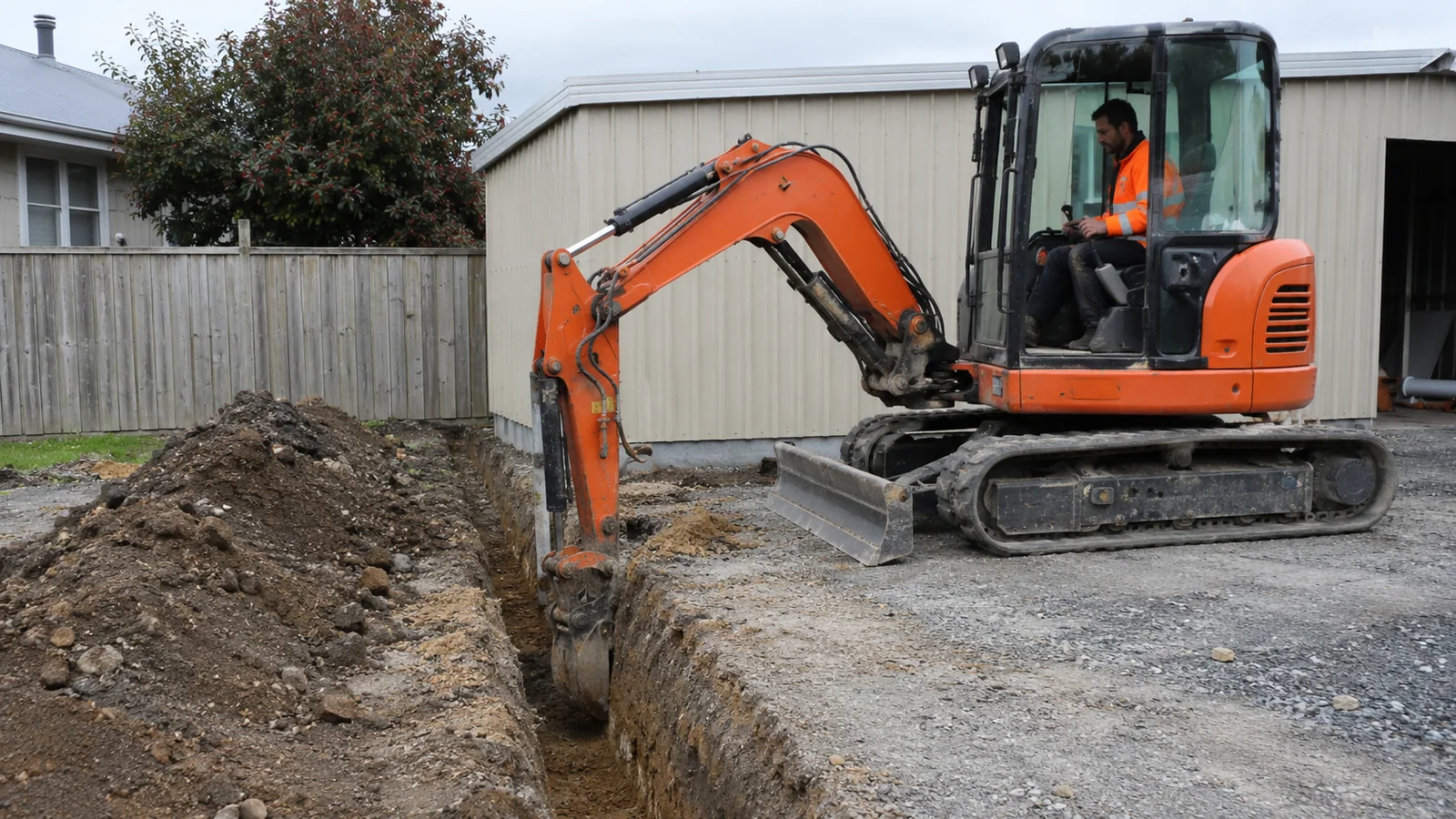
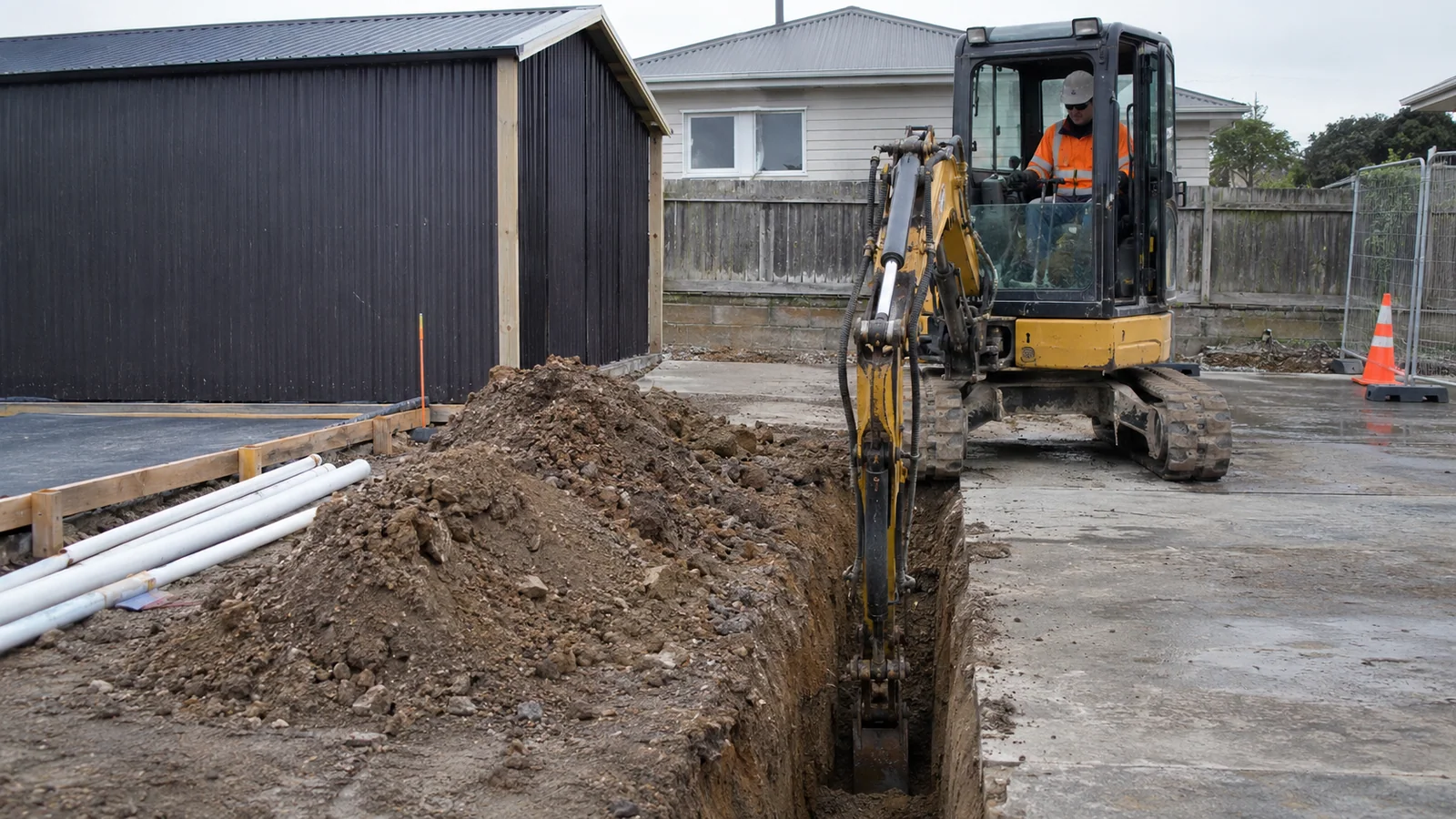
Shored, safe, survey-controlled trenches for stormwater, sewer, water, power and communications, with careful backfill, compaction and tidy reinstatement that keep your project moving with minimal disruption to traffic and neighbours.
Get A Free Trenching EstimateShoring or battering, exclusion zones and monitoring in line with WorkSafe requirements.
Trenches excavated to design depths and widths, ready for bedding and pipe or cable installation.
Surfaces made good with minimal disruption to traffic and neighbours.
Trenches carry pipes, cables and footings, and they need to be cut cleanly, to the right grade and with enough room to bed and compact properly. Depth also brings risk, so deeper trenches require shoring, battering or other controls to protect workers. Services have to be located before digging starts, and work in roads or reserves needs corridor access approval and traffic management. Backfill and reinstatement are inspected afterwards. The requirements below outline the typical dimension, safety and approval expectations for trenching in Dunedin, helping you plan drainage, service and footing work safely and efficiently.
Trench widths, depths and grades follow pipe and service drawings, with sufficient working width for bedding and compaction, and cover set by council and utility requirements.
Trenches deeper than 1.5 metres generally need shoring, battering or other controls under WorkSafe guidance, with services located, exclusion zones and monitoring in place to protect workers.
Trenching in roads or reserves needs corridor access approval, traffic management plans and utility consent, with backfill, compaction and reinstatement completed to council specification and inspected.
Helpful guidance for planning a durable concrete project in Dunedin.
Trenches deeper than 1.5 metres generally need shoring, battering or other controls under WorkSafe guidance. Services are located first, exclusion zones are set and the trench is monitored while people are working in it. Shallower trenches in soft or wet ground can still need support, so ground conditions always count.
Widths, depths and grades follow the pipe and service drawings. The trench also needs enough working width for bedding and compaction, and cover depths are set by council and utility requirements. Narrower is not always better, as cramped trenches make good bedding and compaction difficult to achieve properly or inspect.
Usually, yes. Trenching in roads or reserves needs corridor access approval, traffic management plans and utility consent. Backfill, compaction and reinstatement must meet council specification and be inspected. Apply early, because approvals can take time and may restrict working hours, access or the traffic arrangements allowed on site at all.
Trenches are backfilled and compacted in controlled layers, then the surface is made good to match what was there, whether that is lawn, concrete, asphalt or road seal. In public areas, reinstatement is completed to council specification and inspected, with minimal disruption to traffic, neighbours and any passing pedestrians nearby.
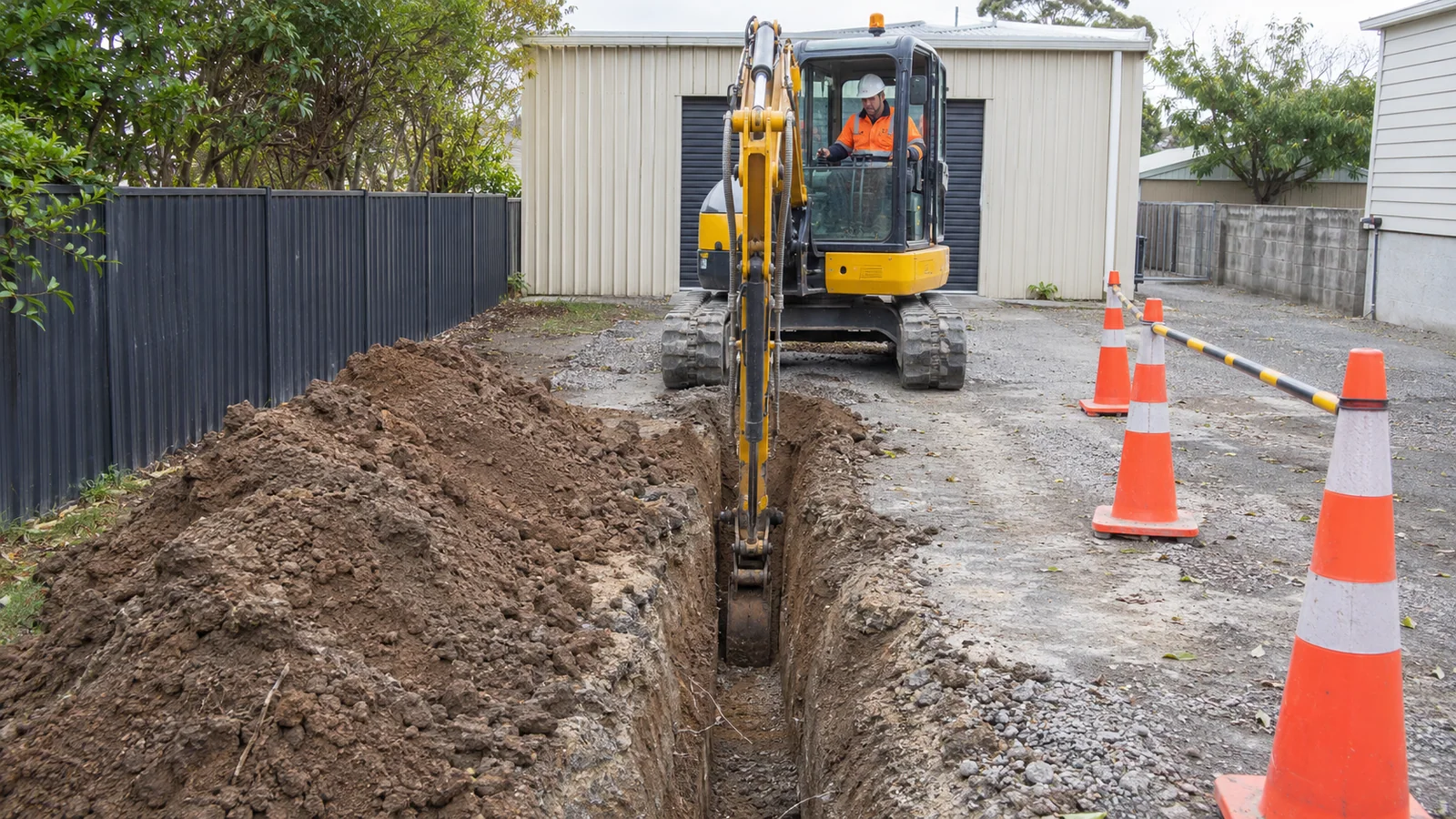
Tell us about your project and our local Dunedin team will come back with practical advice, clear pricing and a free, no-obligation quote, so you can move forward with confidence.
Get A Free Estimate