Dock Slabs and Aprons
Reinforced concrete aprons and dock slabs designed for truck loads, braking forces and turning movements, giving loading areas surfaces that resist cracking, rutting and edge damage.
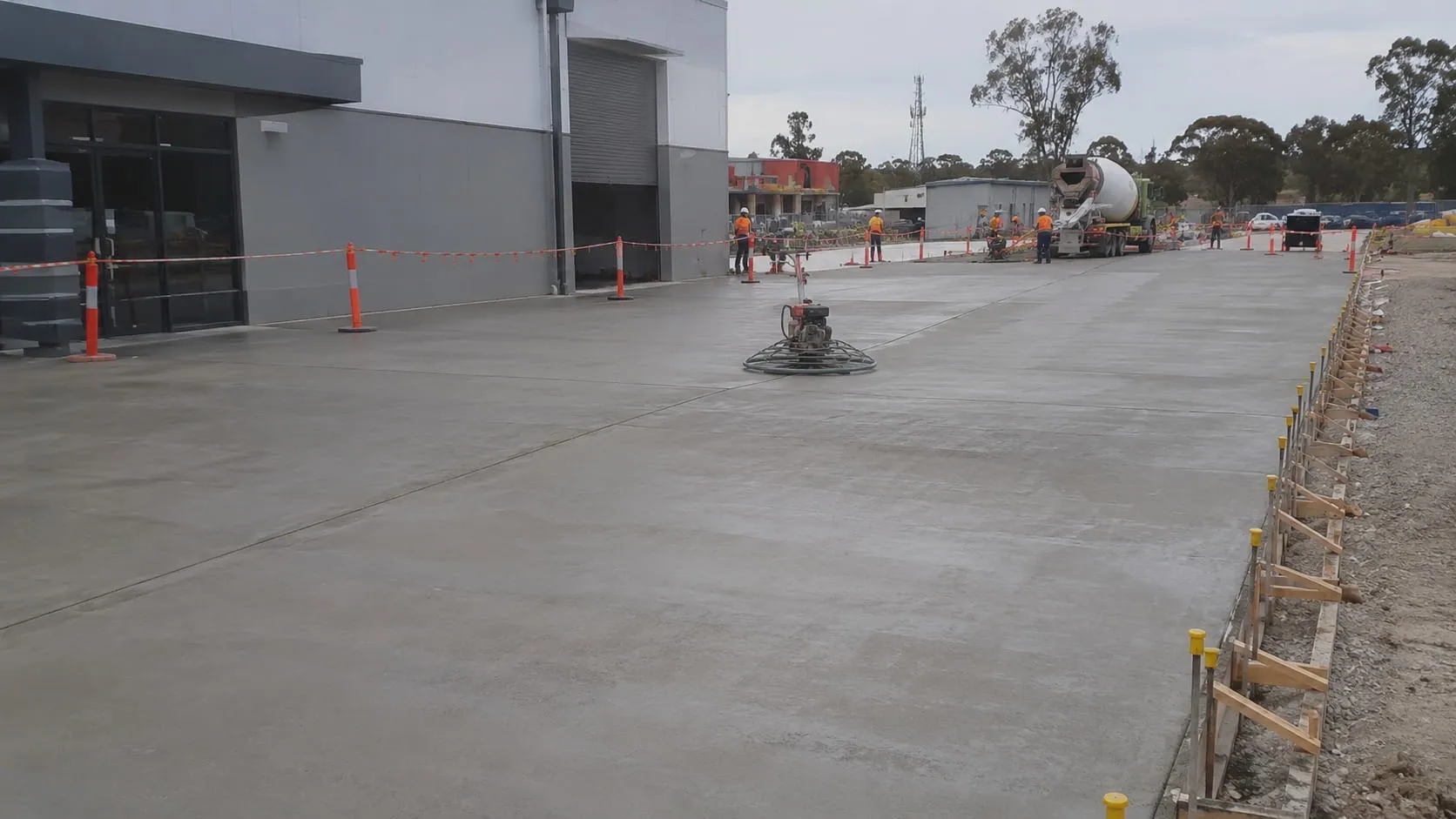
Concrete loading docks, truck ramps and approaches built to handle repeated heavy vehicle loading.
Loading docks and ramps in Dunedin are among the hardest-working parts of any commercial or industrial site, taking repeated truck, trailer and forklift impact every day. We build docks with precise levels, strong reinforcement and durable edges, so trailers align properly and your team can load safely and efficiently. Dock leveller pits, bollard footings, aprons and ramp gradients all need accurate setout, and we confirm dimensions with your equipment suppliers and engineer before pouring.
Good drainage matters too, because water and ice around loading areas create safety risks in Dunedin's cold climate. We plan work around your deliveries and dispatch times wherever possible, using staged construction and clear communication. We keep your team informed, so deliveries are protected and handover is smooth.
The result is a strong, functional loading area that supports efficient operations and stands up to heavy use.
Reinforced concrete aprons and dock slabs designed for truck loads, braking forces and turning movements, giving loading areas surfaces that resist cracking, rutting and edge damage.
Accurately formed and reinforced pits for dock levellers, built to manufacturer dimensions and drained correctly, so equipment installs smoothly and operates reliably throughout its entire working life.
Concrete ramps and approaches built to safe gradients with transitions, allowing trucks, trailers and forklifts to enter and exit your dock without scraping or bouncing.
Strengthened slab edges, bollard footings and protective kerbing that absorb impact from reversing trucks and forklifts, protecting buildings, equipment and people around your loading area.
Correct falls, trench drains and sumps that remove rainwater, spills and washdown, reducing slip and ice risks on Dunedin's cold mornings and protecting the subgrade.
Concrete ramps and access paths for forklifts, trolleys and pedestrians, built to gradients with slip-resistant finishes that keep goods and people moving around your building.
Loading docks take the hardest daily use on any site, with heavy trucks, tight tolerances and constant impact. We build docks with precise levels, strong reinforcement and durable edges, so trailers align properly and your team can load safely. Dock leveller pits, bollards and ramps are set out against supplier drawings, avoiding expensive surprises when equipment arrives. Dunedin's cold, wet weather makes drainage and ice control important, so we plan them carefully. We keep your operations team informed throughout, so deliveries are protected and handover is smooth. We also work around your delivery times, helping your dock return to service quickly.
Get A Free Estimate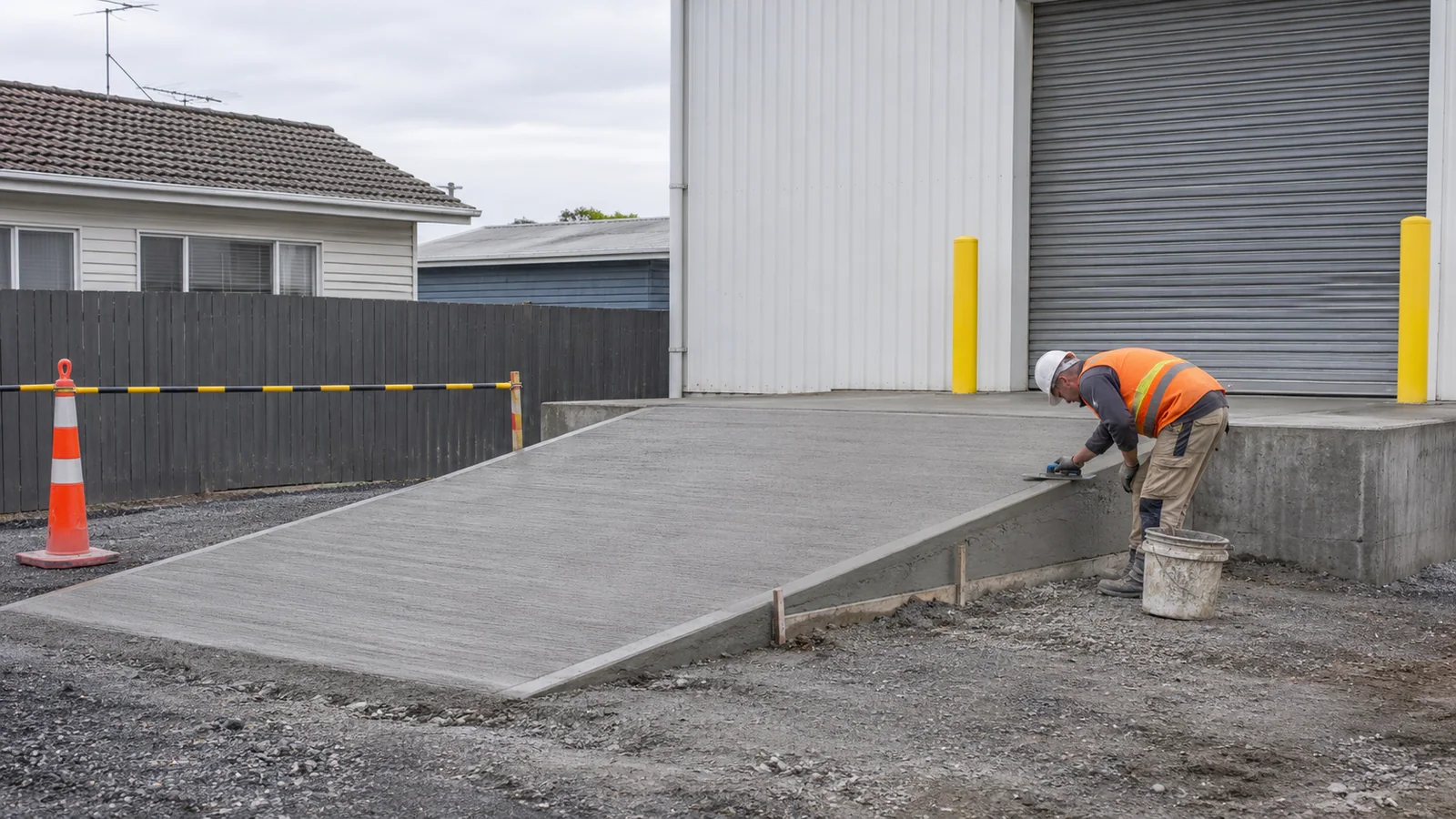
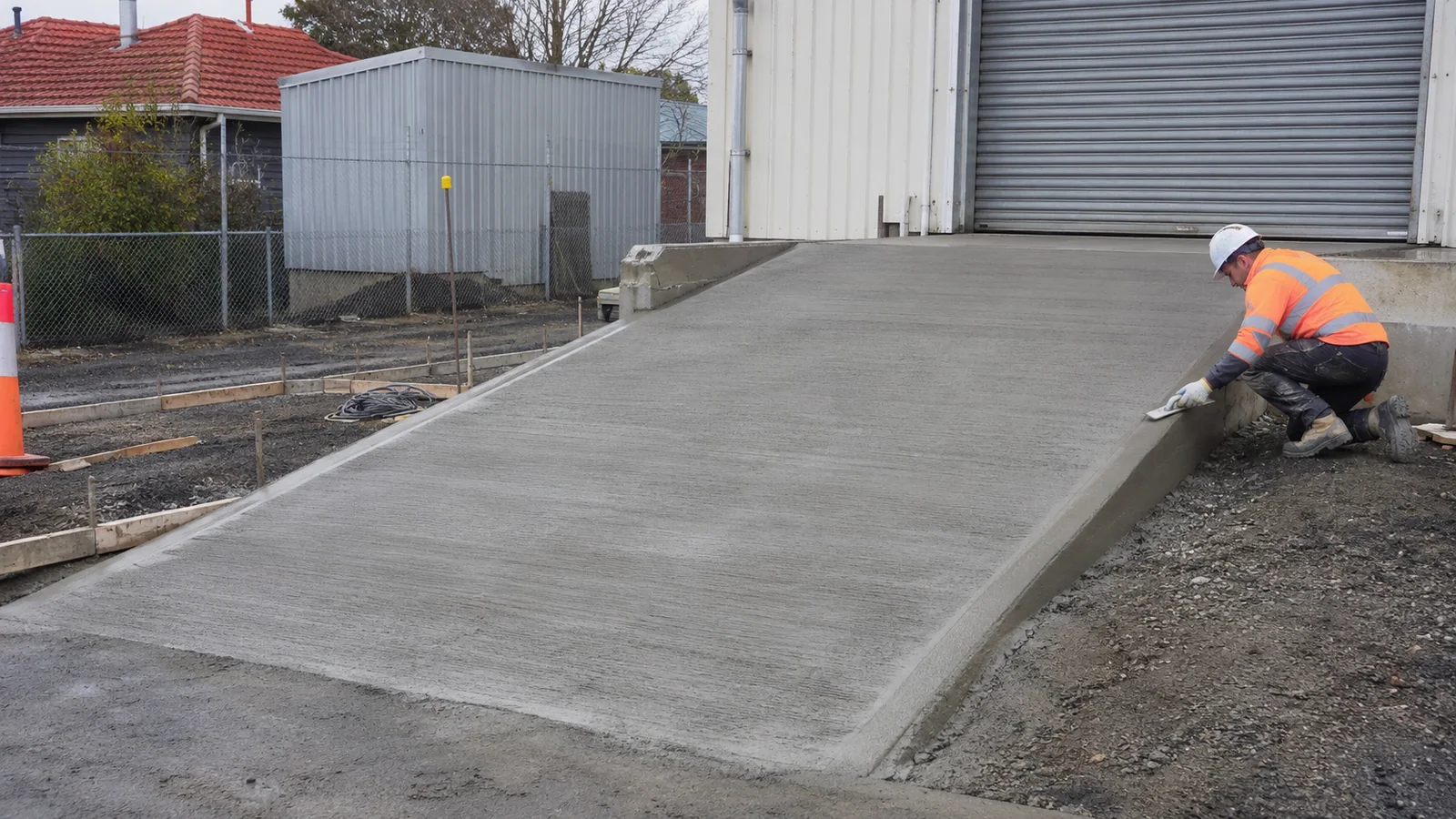
Precisely levelled loading docks, reinforced aprons and impact-ready concrete edges built around your trucks and equipment, so loading stays safe, efficient and ready to return to service quickly after construction.
Get A Free Loading Docks and Ramps EstimatePit dimensions, levels and ramp gradients confirmed against equipment drawings before pouring.
Reinforced edges and bollard footings built for repeated truck and forklift movement.
Planned works that limit disruption to deliveries and dispatch.
Loading docks and ramps are working areas where trucks, forklifts and people all meet, so accuracy and strength matter more than appearance. Dock heights must match the vehicles you use, pits and levellers need to suit supplier drawings, and edges must withstand repeated impact. Ramp gradients also affect safety and how easily loads move. Because these structures involve heavy traffic and pedestrians, consent and health and safety requirements often apply. Below we outline the typical dimension, reinforcement, impact and consent considerations for loading docks and ramps in Dunedin, helping you plan a facility that works efficiently and safely every day.
Dock heights, leveller pit dimensions and ramp gradients follow supplier drawings and your design vehicles, often with a dock height near 1.2 metres, so trucks align.
Dock slabs and aprons use reinforced concrete, often 200 millimetres or thicker, with edges and bollard footings designed for truck impact, forklift traffic and braking forces.
Docks need building consent where structural, with council conditions for truck access and drainage, and WorkSafe requirements for traffic management, pedestrian separation and working near vehicles.
Helpful guidance for planning a durable concrete project in Dunedin.
Dock heights follow supplier drawings and your design vehicles, often with a dock height near 1.2 metres so trucks align. Leveller pit dimensions and ramp gradients are also set from supplier drawings. Confirming the vehicles you use before design begins helps the dock work properly from day one of operation.
Dock slabs and aprons use reinforced concrete, often 200 millimetres or thicker, with edges and bollard footings designed for truck impact, forklift traffic and braking forces. The reinforcement and edge details are set by your engineer, so repeated knocks and heavy braking do not break the concrete down over time.
Docks need building consent where structural, with council conditions for truck access and drainage. WorkSafe requirements also cover traffic management, pedestrian separation and working near vehicles. Your designer can confirm which approvals apply to your site and loading arrangements before construction begins, so nothing is missed along the whole way.
Check ramp gradients against the vehicles and forklifts that will use it, as steep gradients affect safety and how easily loads move. Surface finish, drainage and edge protection also matter. Your engineer sets these details, and confirming them early avoids expensive changes once concrete has been placed, cured and finished.
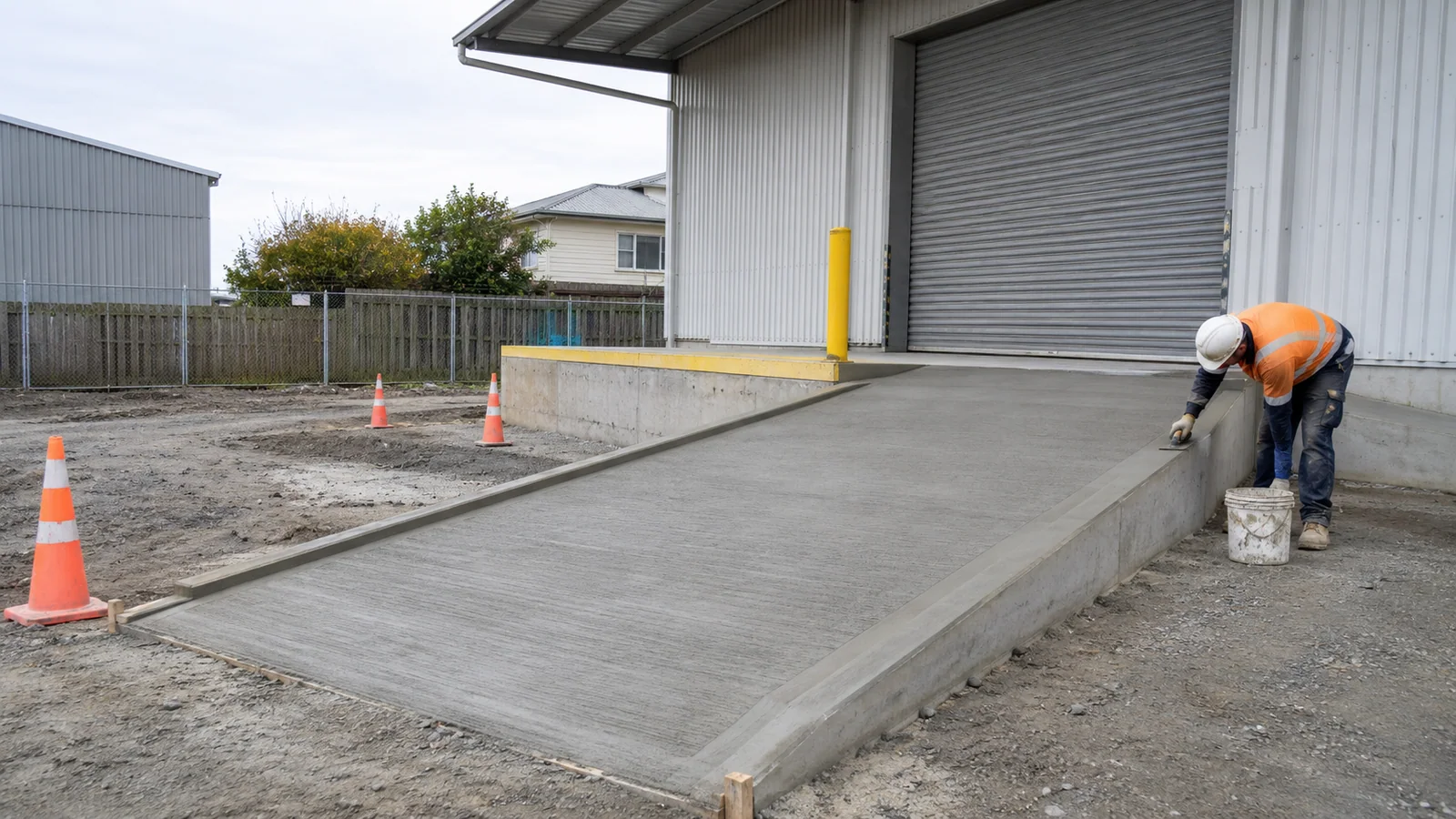
Tell us about your project and our local Dunedin team will come back with practical advice, clear pricing and a free, no-obligation quote, so you can move forward with confidence.
Get A Free Estimate