Earthworks and Lot Preparation
Bulk earthworks, trimming and compaction that create stable, correctly graded lots and roads, preparing your subdivision for services, kerbing and building construction at every development stage.
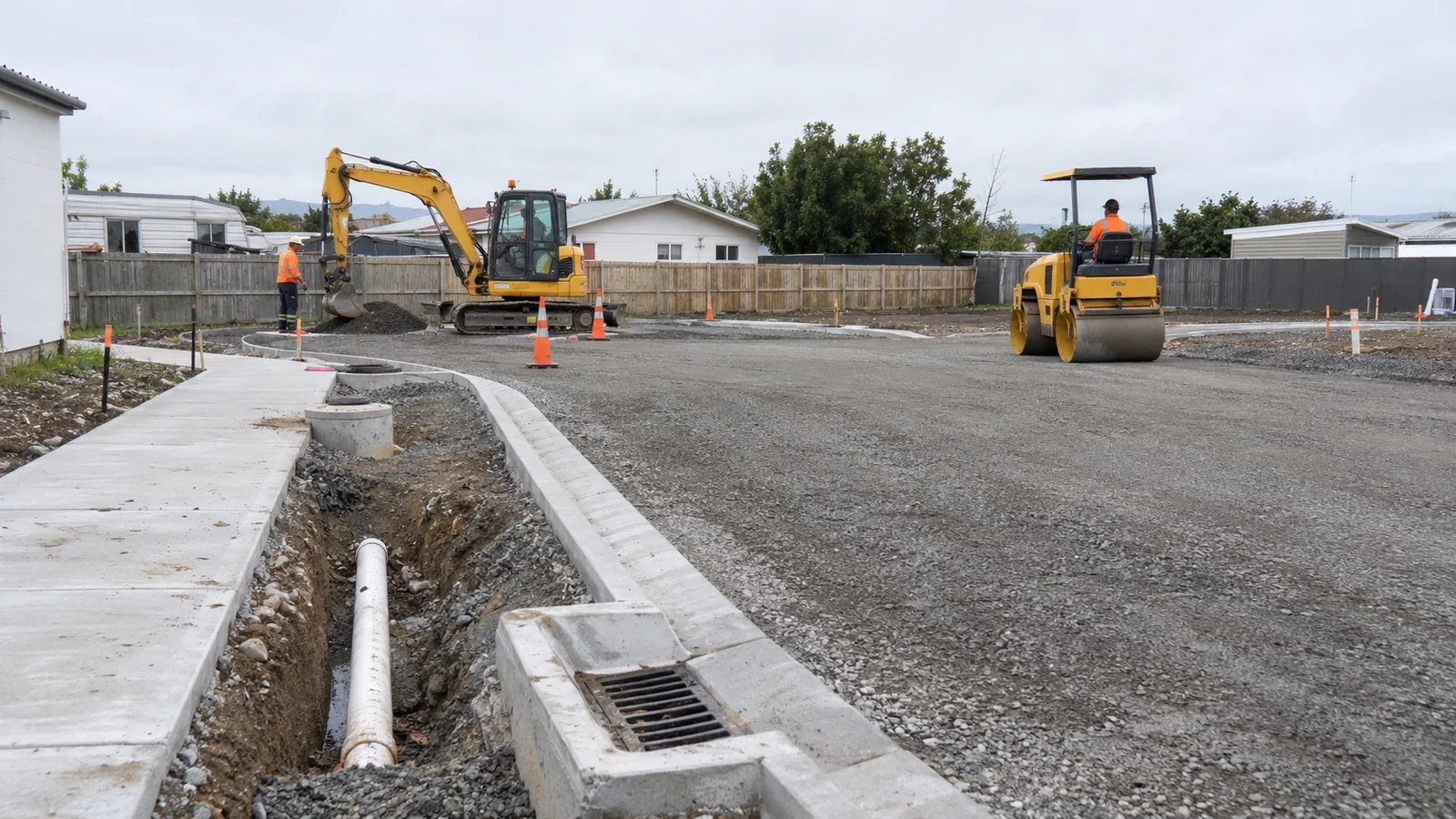
Concrete civil works for new subdivisions, including kerbing, footpaths, drainage structures and accessways.
Subdivision civil works in Dunedin bring together earthworks, roads, kerbing, drainage, footpaths and retaining structures, so coordination between trades determines whether lots reach title on time. We deliver concrete and civil packages for developers, working to approved plans, council subdivision requirements and your engineer's specifications. Dunedin's hilly sites often require substantial cut and fill, retaining walls and carefully designed stormwater, and we plan these elements as part of one connected program.
Hold points and inspections are arranged in advance, and we provide test results and as-built records as work progresses. Having fewer contractors to manage reduces risk and simplifies communication. We coordinate with councils, utility providers and consultants, so each stage is accepted and your project moves towards title.
The result is a well-built, compliant subdivision infrastructure package that helps developers hit milestones, control costs and complete projects with confidence.
Bulk earthworks, trimming and compaction that create stable, correctly graded lots and roads, preparing your subdivision for services, kerbing and building construction at every development stage.
Concrete kerb and channel, road bases and pavements constructed to council and developer standards, giving your estate durable streets and a consistent, high-quality appearance for residents.
Pipes, pits, inlets and connections installed to engineered designs, managing runoff across your development and discharging safely and legally to approved council infrastructure or detention systems.
Concrete footpaths, shared paths and pram crossings that connect lots, parks and amenities, built to accessible gradients and finished neatly to support future residents and visitors.
Retaining walls, headwalls and entry features constructed in quality concrete, supporting steep lots, drainage structures and estate presentation while meeting all engineering and council requirements.
Practical program planning, regular progress updates and organised handover documentation, helping developers coordinate stages, meet milestones and reach title with fewer delays and far less stress.
Subdivisions depend on many trades working together, from earthworks and drainage to kerbing, roads and paths. We deliver concrete and civil packages for developers, coordinating each stage so your lots progress towards title. Dunedin's hilly sites often need substantial cut and fill, retaining walls and carefully designed stormwater, and we plan these as one connected program. Our crews understand council requirements, arrange inspections ahead of time and provide test results and as-built records. We provide regular progress reports, so developers know where each stage stands. Fewer contractors to manage means clearer communication, lower risk and a smoother path to completion.
Get A Free Estimate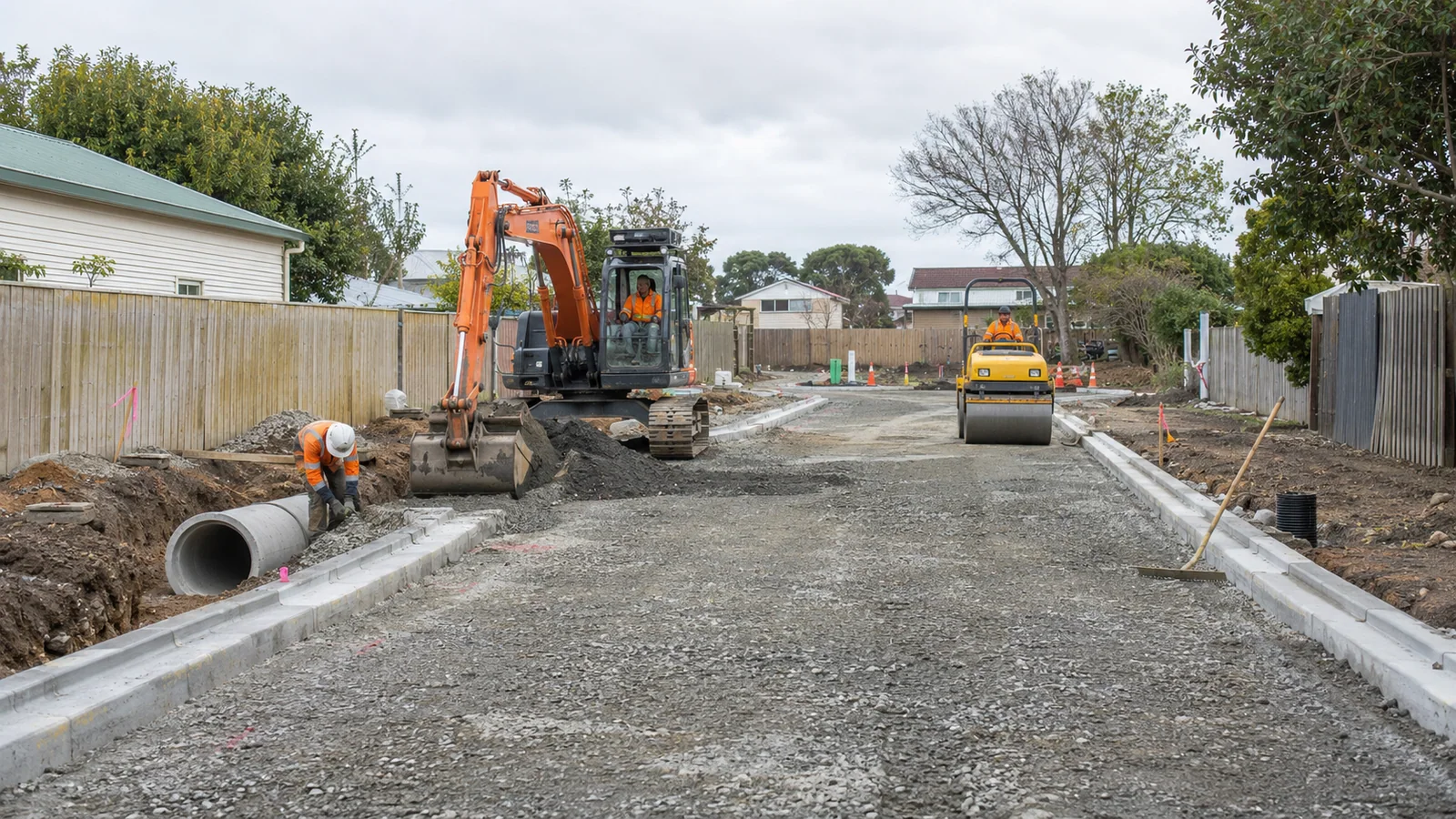
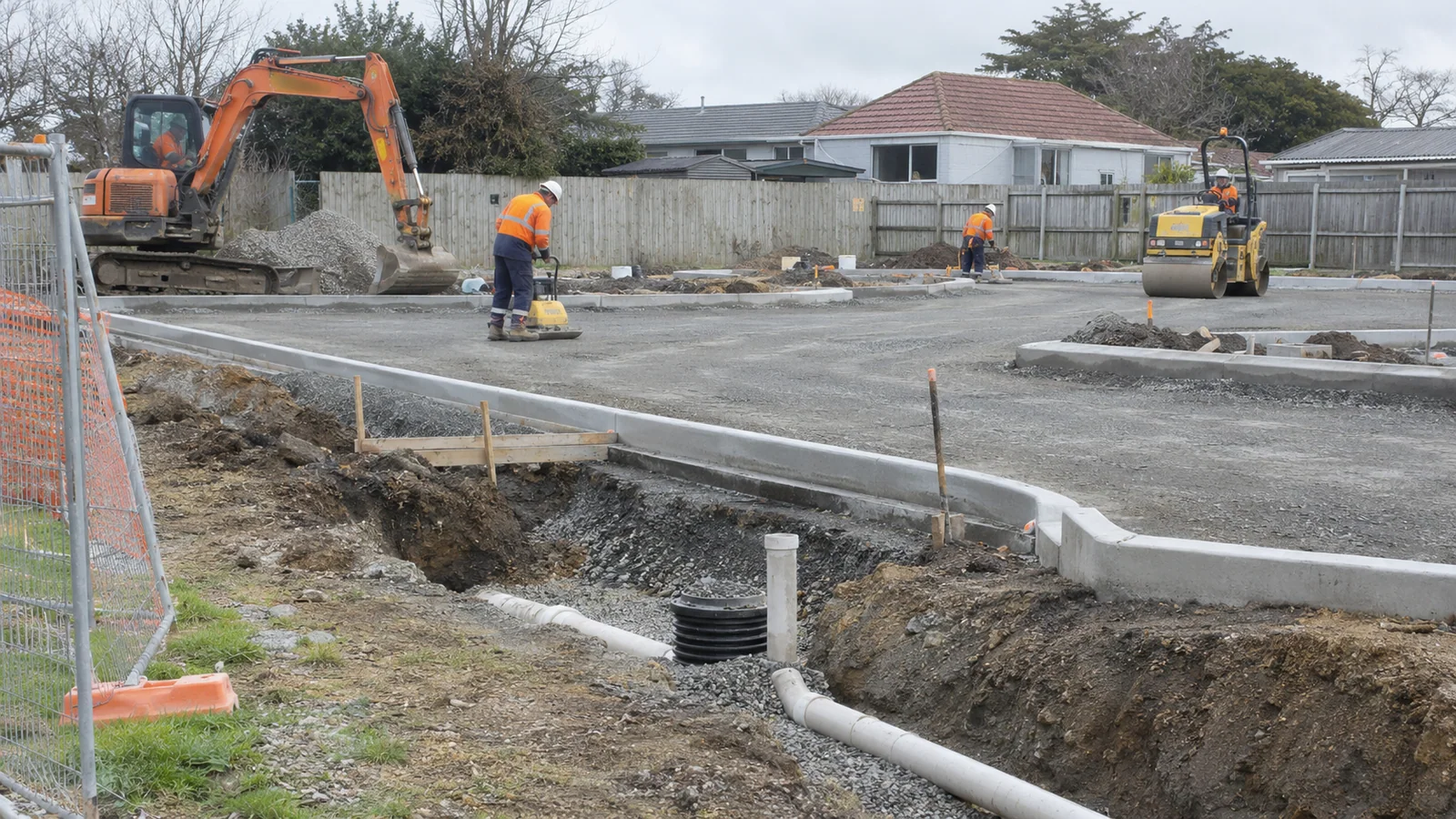
Earthworks, roads, kerbing, drainage, paths and retaining walls delivered as one coordinated civil package, with clear, regular reporting and council-ready as-built records that help developers reach completion and title sooner.
Get A Free Subdivision Civil Works EstimateClear programs and regular reporting that help your project hit its milestones.
Roads, kerbs, drainage and paths built to approved plans and specifications.
Multiple civil trades under one contractor, reducing delays and coordination headaches.
Subdivision civil works turn raw land into serviced, usable sections, and they follow a detailed framework of standards and approvals. Roads, kerbs, footpaths, drainage and service corridors are all designed to the Dunedin Code of Subdivision and Development, then checked by council engineers. Testing of concrete, basecourse and fill backs up certification, and accurate records are essential. Titles cannot be issued until completion documents and as-built plans are accepted. This section outlines the typical standards, materials, testing and consent requirements for subdivision civil works in Dunedin, helping developers understand the path from first earthworks to final sign-off.
Road widths, kerb profiles, footpaths and service corridors follow the Dunedin Code of Subdivision and Development, with pavement design, drainage and levels checked by council engineers.
Concrete, basecourse and fill must meet specified strengths and compaction, with density testing, concrete cylinders and survey records supporting engineer certification and council acceptance of subdivision infrastructure.
Subdivision works need resource consent, engineering approval, erosion controls, traffic management and section 224c certification, with completion documents and as-built plans required before titles can be issued.
Helpful guidance for planning a durable concrete project in Dunedin.
Typical works include roads, kerb and channel, footpaths, stormwater drainage, service corridors and accessways. They are designed to the Dunedin Code of Subdivision and Development and checked by council engineers. The exact scope depends on your resource consent conditions and the engineering drawings approved for your subdivision for each stage.
Concrete, basecourse and fill must meet specified strengths and compaction. Density testing, concrete cylinders and survey records support engineer certification and council acceptance. Keeping these records organised during construction makes final sign-off much smoother and avoids delays when applying for completion documents, titles and final council sign-off, acceptance and handover.
Titles cannot be issued until section 224c certification, completion documents and as-built plans have been accepted. That means all infrastructure must be finished, tested and signed off first. Developers usually plan for this step early, since delays in paperwork can hold up settlement of sections or sections can be sold.
Subdivision works need resource consent, engineering approval, erosion controls and traffic management, followed by section 224c certification. Council engineers review designs and inspect work along the way. Your surveyor or engineer normally manages the consent pathway, while the contractor builds to the approved plans at each stage of the development.
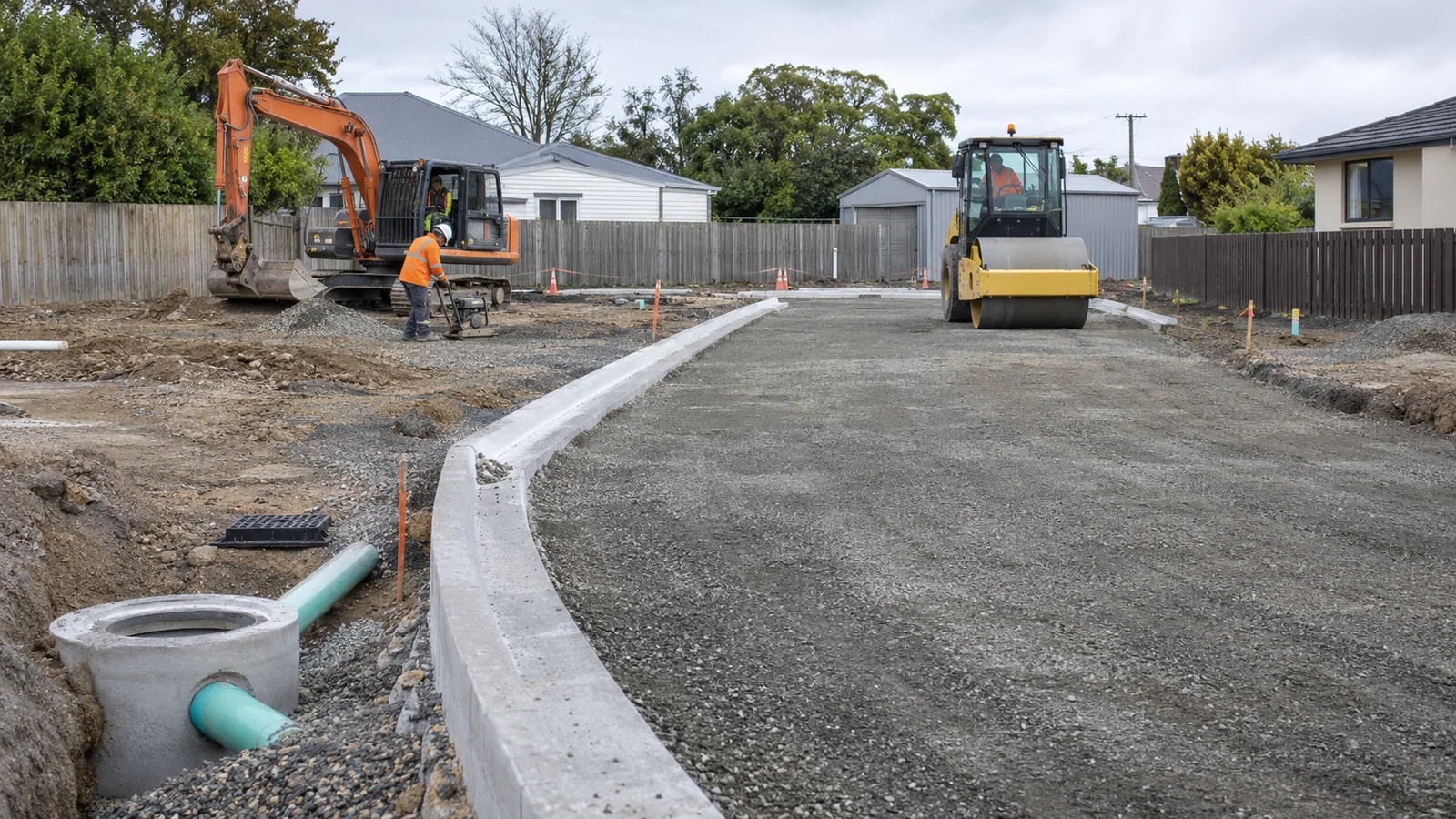
Tell us about your project and our local Dunedin team will come back with practical advice, clear pricing and a free, no-obligation quote, so you can move forward with confidence.
Get A Free Estimate