Factory and Depot Pavements
Heavy-duty concrete pavements for factories, depots and processing facilities, designed for forklift, truck and plant movements that cause rapid wear and early failure on lighter surfaces.
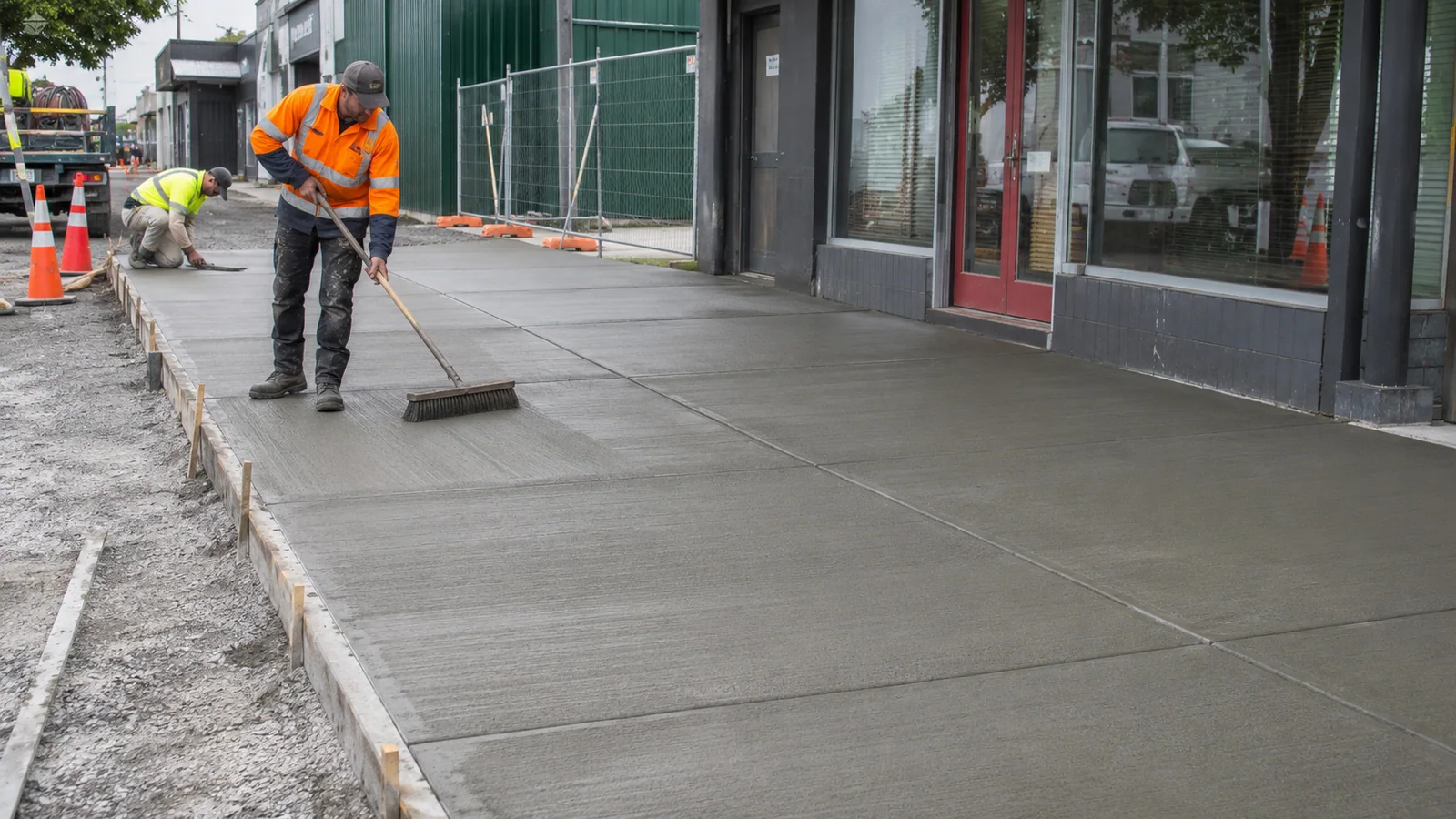
Concrete pavements for commercial, industrial and public areas, built on a prepared and compacted subgrade.
Concrete pavements in Dunedin provide strong, low-maintenance surfaces for factories, depots, retail centres, car parks and civil projects, where vehicles, forklifts and pedestrians all rely on a safe, level working area. We design the build around your loads, drainage and site layout, working from your engineer's pavement design. Quality subgrade preparation, compacted base courses, correct reinforcement and well-placed joints all reduce cracking and extend pavement life.
In Dunedin's frosty, wet climate, drainage and surface finish matter even more, so we set falls carefully and select textures that provide reliable traction. Staged construction keeps your site operating where possible. We provide test results and inspection records, protect joints and edges during curing, and help your pavement reach completion without defects.
The result is a smooth, durable pavement that handles heavy traffic, resists weather damage and protects your investment for many years.
Heavy-duty concrete pavements for factories, depots and processing facilities, designed for forklift, truck and plant movements that cause rapid wear and early failure on lighter surfaces.
Attractive, durable pavements for shopping centres, business parks and public spaces, combining strength with smooth finishes, clean jointing and a professional appearance that welcomes all customers.
Practical input on thickness, reinforcement, joints and drainage matched to your loads and subgrade, avoiding unnecessarily costly over-design and premature failure under real-world heavy vehicle use daily.
Excavation, stabilisation and compaction that strengthen weak or reactive subgrades, giving your pavement a stable base and reducing movement, cracking and long-term maintenance costs for owners and operators.
Carefully planned contraction, construction and expansion joints, sealed to keep out water and debris, protecting your pavement edges and supporting smooth, quiet vehicle movement for years.
Concrete pavement patching, panel replacement and extensions that tie neatly into existing surfaces, extending the life of your site and giving you a consistent working area.
A commercial pavement needs to carry heavy traffic, drain properly and look professional for many years. We construct concrete pavements for factories, depots, retail centres and civil projects, with thickness, reinforcement and joints matched to your engineer's design. Dunedin's frosty, wet climate makes drainage and surface texture especially important, so we set falls carefully and choose finishes that provide reliable traction. We stand behind every pavement we build, with clear communication from start to finish. Our crews coordinate with other trades, stage works around your operations and protect joints and edges during curing, helping your pavement reach completion without defects.
Get A Free Estimate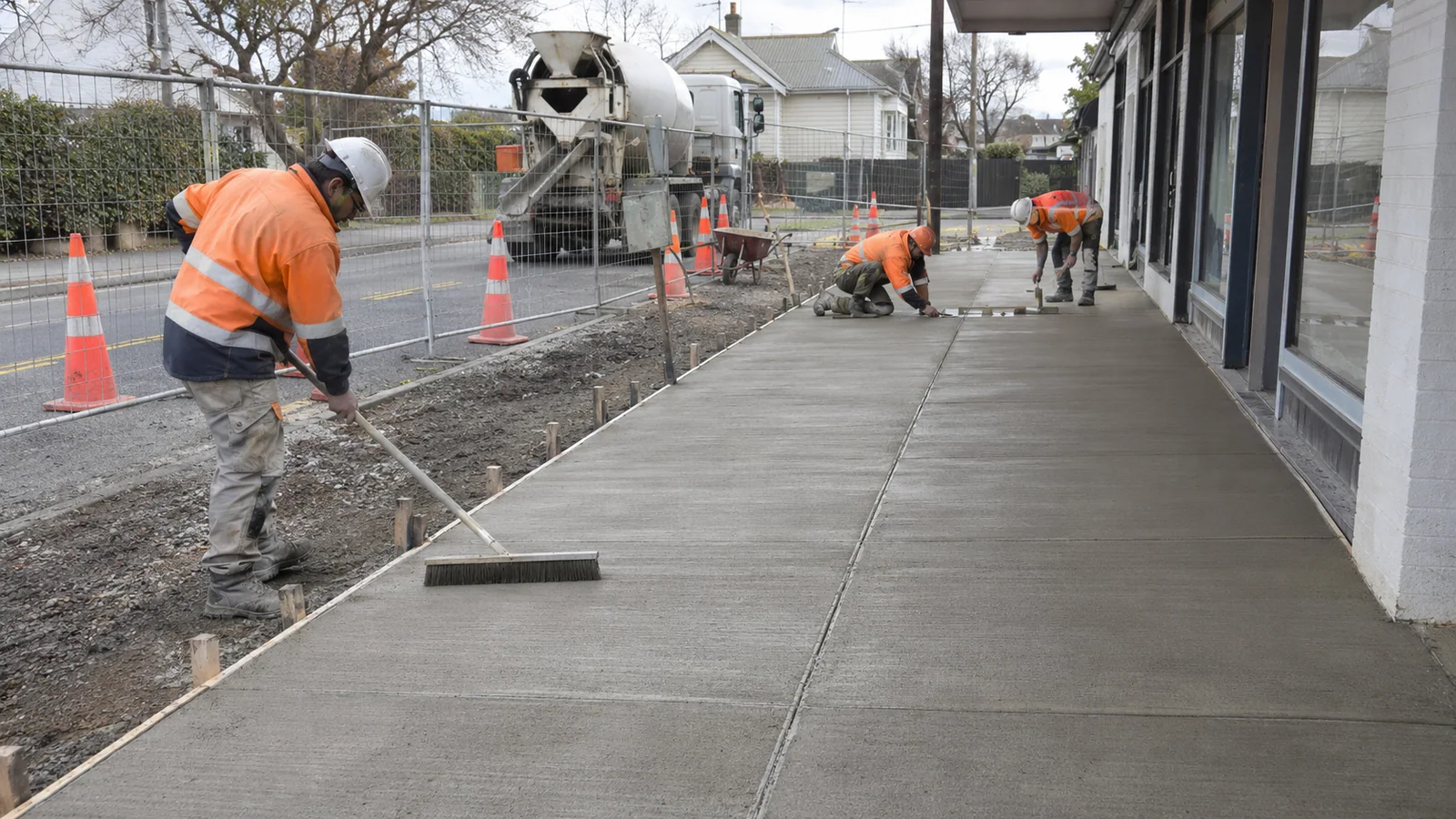
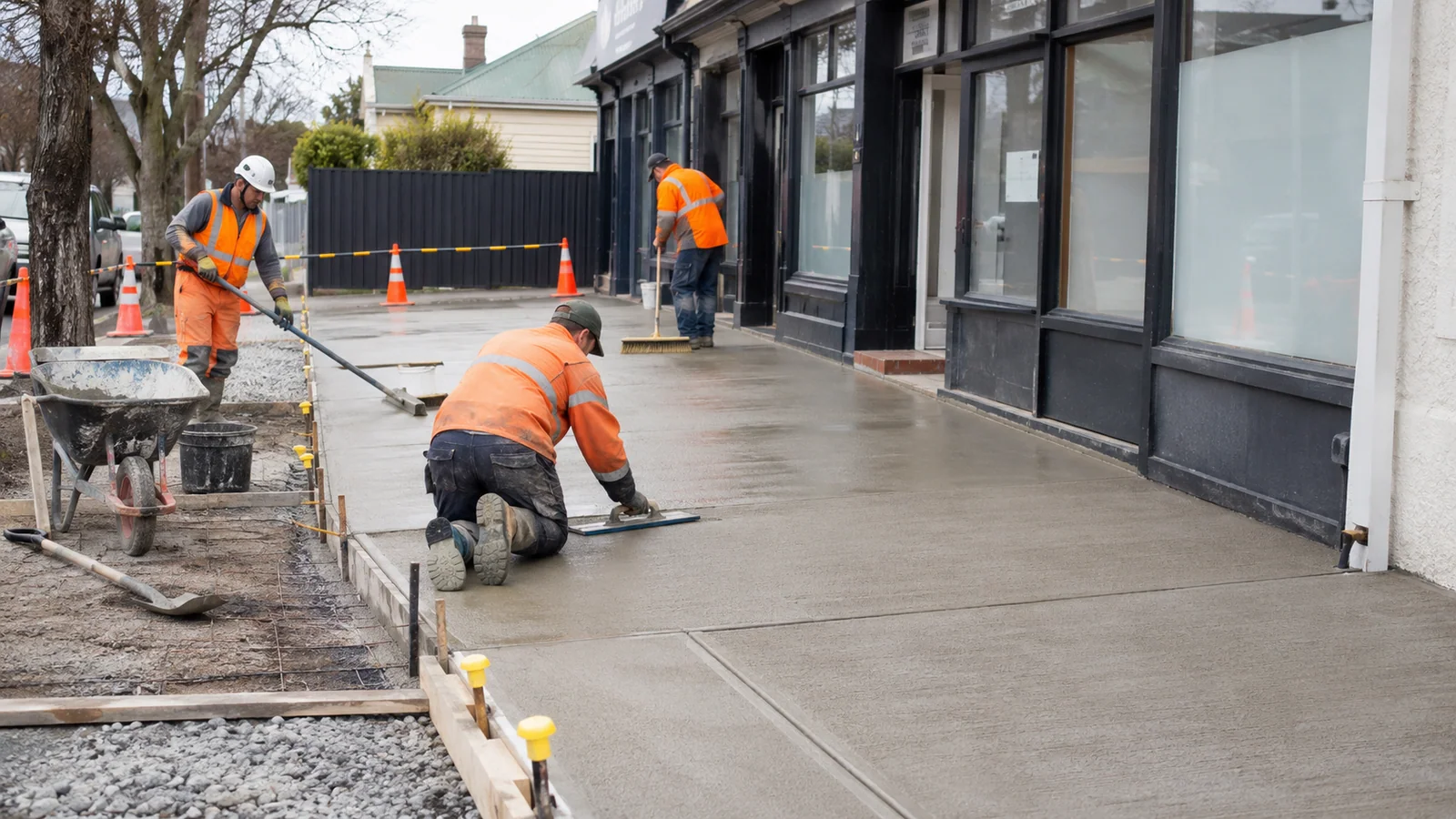
Smooth, durable concrete pavements for factories, depots and large commercial sites, designed around your traffic loads with quality bases, planned joints and surfaces that stay safe in wet, frosty weather.
Get A Free Pavements EstimateThickness and reinforcement matched to vehicles, plant and traffic volumes.
Careful joint layouts and curing practices that protect long-term performance.
Finishes that suit heavy vehicles, forklifts and pedestrians, with reliable drainage.
Concrete pavements serve commercial, industrial and public areas, and their performance depends heavily on what lies beneath the surface. A compacted, tested subgrade and basecourse give the slab even support, which helps prevent settlement and cracking. Thickness is then matched to expected traffic, with joints, finish and reinforcement chosen for durability and traction. Because surfaces shed water, stormwater falls and discharge controls also matter in Dunedin's wet climate. This section sets out the typical thickness, mix, jointing and council requirements for concrete pavements, so you understand how a durable surface is designed, built and approved before work begins.
Commercial pavement thickness is set by traffic loads and subgrade strength, commonly 150 to 250 millimetres, with compacted basecourse tested for density to prevent settlement and cracking.
Mixes are typically 25 to 32 megapascals, with jointing, reinforcement and broom or textured finishes specified for traction, durability and frost exposure, particularly on external surfaces.
Pavements need consent where required under the district plan, with stormwater falls, discharge controls and access crossings meeting council requirements, and records supporting approval and handover.
Helpful guidance for planning a durable concrete project in Dunedin.
The subgrade is trimmed and compacted, then a basecourse is laid and tested for density so the slab gets even support. Skipping this step risks settlement and cracking later. Formwork, reinforcement and falls are also set out and checked before the concrete arrives on site and everything is checked first.
Thickness is set by traffic loads and subgrade strength, commonly 150 to 250 millimetres for commercial pavements. A car park with light vehicles needs less than a yard used by loaded trucks. Your engineer confirms the design thickness once the ground conditions and expected traffic are known for your site.
Broom or textured finishes are typically specified for external pavements because they provide traction when wet and in frosty conditions. Mix, jointing and reinforcement are also chosen for durability and frost exposure. Your finish choice depends on how the area is used, including pedestrians, forklifts or vehicles for your site.
Pavements are laid with falls so water runs towards sumps, channels or discharge points rather than ponding. Those falls, along with discharge controls and access crossings, usually need to meet council requirements. Getting levels right at the pour stage matters because slab falls are very hard to correct afterwards too.
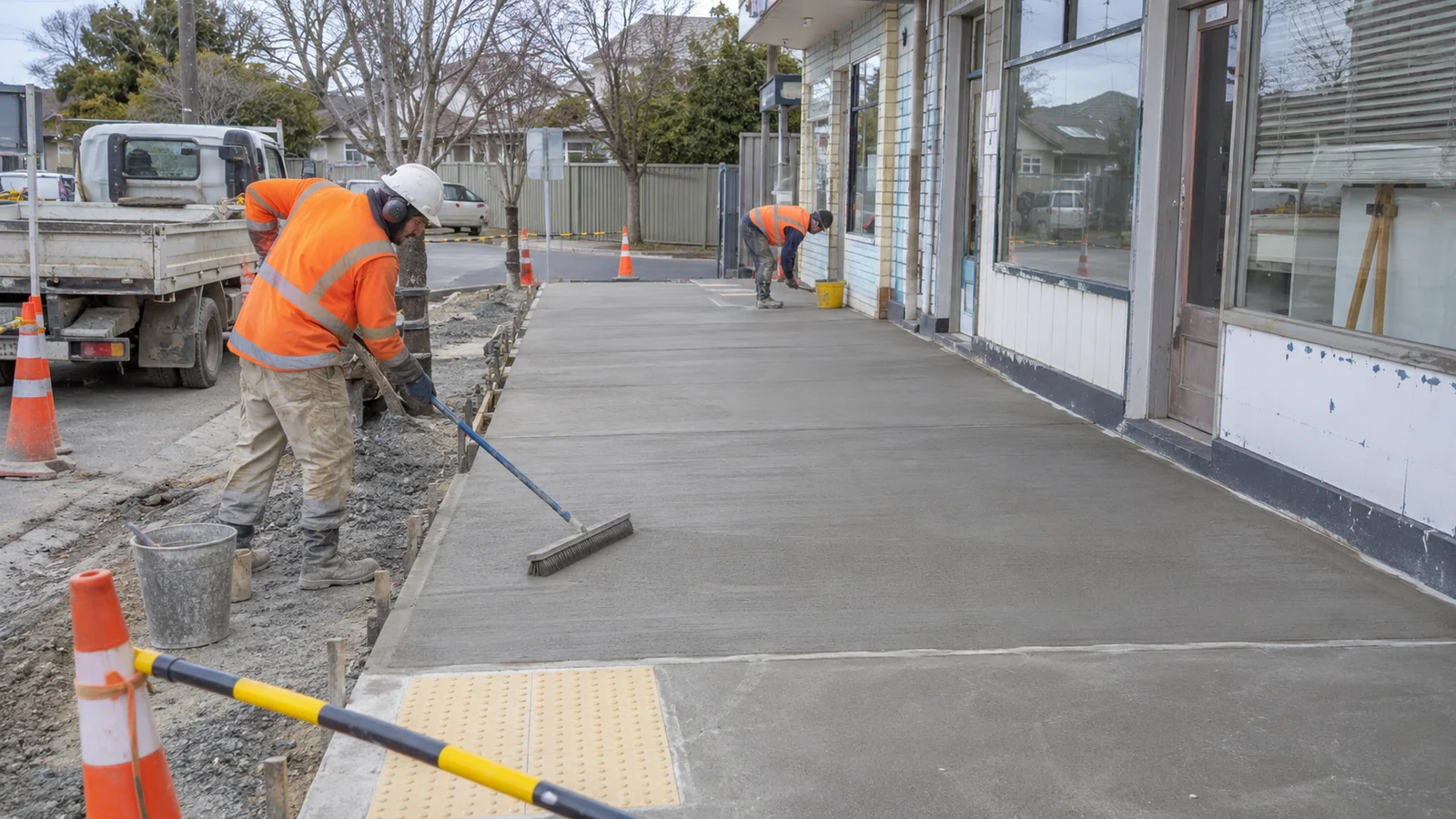
Tell us about your project and our local Dunedin team will come back with practical advice, clear pricing and a free, no-obligation quote, so you can move forward with confidence.
Get A Free Estimate