Council and Public Footpaths
Footpaths built to council specifications for streets, parks and public spaces, with consistent widths, smooth finishes and correct crossfalls that keep pedestrians safe in all weather.
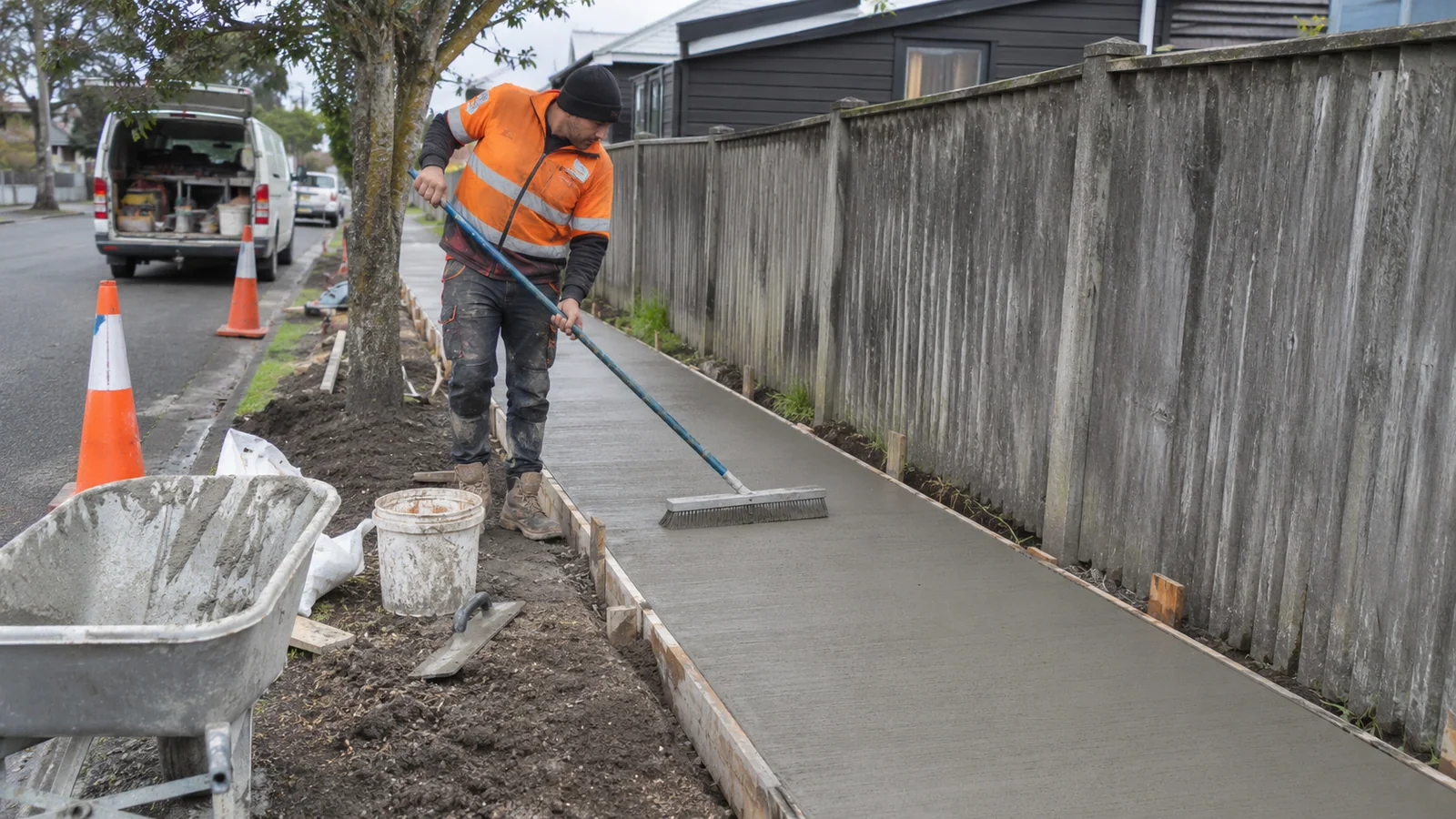
Concrete footpaths for subdivisions, streetscapes and commercial sites, finished for safe, comfortable walking.
Concrete footpaths in Dunedin connect homes, businesses, schools, parks and public spaces, and they need to be safe, accessible and durable in a climate with frequent rain and frost. We build footpaths for councils, developers and commercial sites, with consistent widths, smooth finishes and correct crossfalls for drainage. Kerb ramps, pram crossings and tactile indicators are installed to the required gradients so people with mobility aids can move around confidently.
Our crews work efficiently in live environments, managing pedestrian safety, protecting trees and services, and keeping disruption to neighbours low. Slip-resistant finishes help reduce risk on wet or icy mornings. We communicate with residents and site managers, helping works finish safely on schedule with minimal disruption.
With neat jointing, tidy reinstatement and reliable workmanship, we deliver footpaths that look professional, meet council expectations and remain in good condition for decades.
Footpaths built to council specifications for streets, parks and public spaces, with consistent widths, smooth finishes and correct crossfalls that keep pedestrians safe in all weather.
Durable concrete paths linking car parks, entrances, buildings and amenities, giving staff and customers safe, comfortable access across your commercial or industrial property every single working day.
Accessible ramps and crossings built with tactile indicators, correct gradients and transitions, helping people with prams, wheelchairs and mobility aids move around your site confidently.
Wider concrete paths designed for walkers, runners and mixed users, with smooth surfaces, careful jointing and good drainage that support comfortable, long-lasting public use all year.
Coloured, exposed aggregate or stencilled finishes that give public spaces, plazas and entrances a distinctive character while keeping the strength and low maintenance of quality concrete.
Concrete paths with stepped sections, ramps and handrail provisions for Dunedin's steep streets and sites, giving pedestrians safe, slip-resistant routes in wet and frosty weather.
Footpaths connect communities, so they need to be safe, accessible and built to last in a climate with frequent rain and frost. We construct concrete footpaths for councils, developers and commercial sites, with consistent widths, smooth finishes and correct crossfalls for drainage. Our crews work efficiently in live environments, managing pedestrian safety, protecting trees and services and keeping disruption low for neighbours. Kerb ramps, pram crossings and tactile indicators are built to correct gradients, helping everyone move confidently. We communicate with residents and site managers, helping works finish on schedule and without fuss. You receive tidy, professional paths that are accepted without delay.
Get A Free Estimate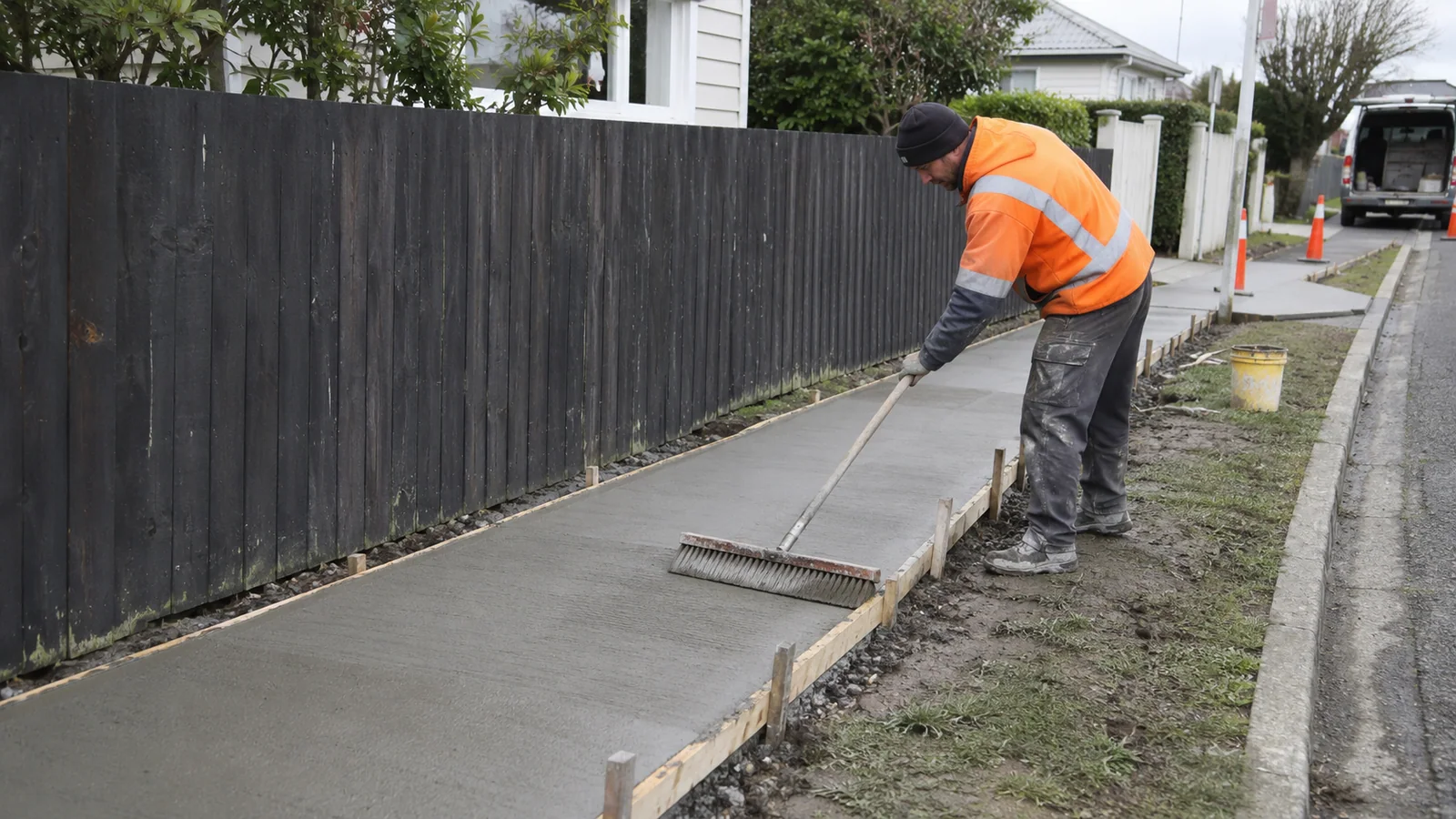
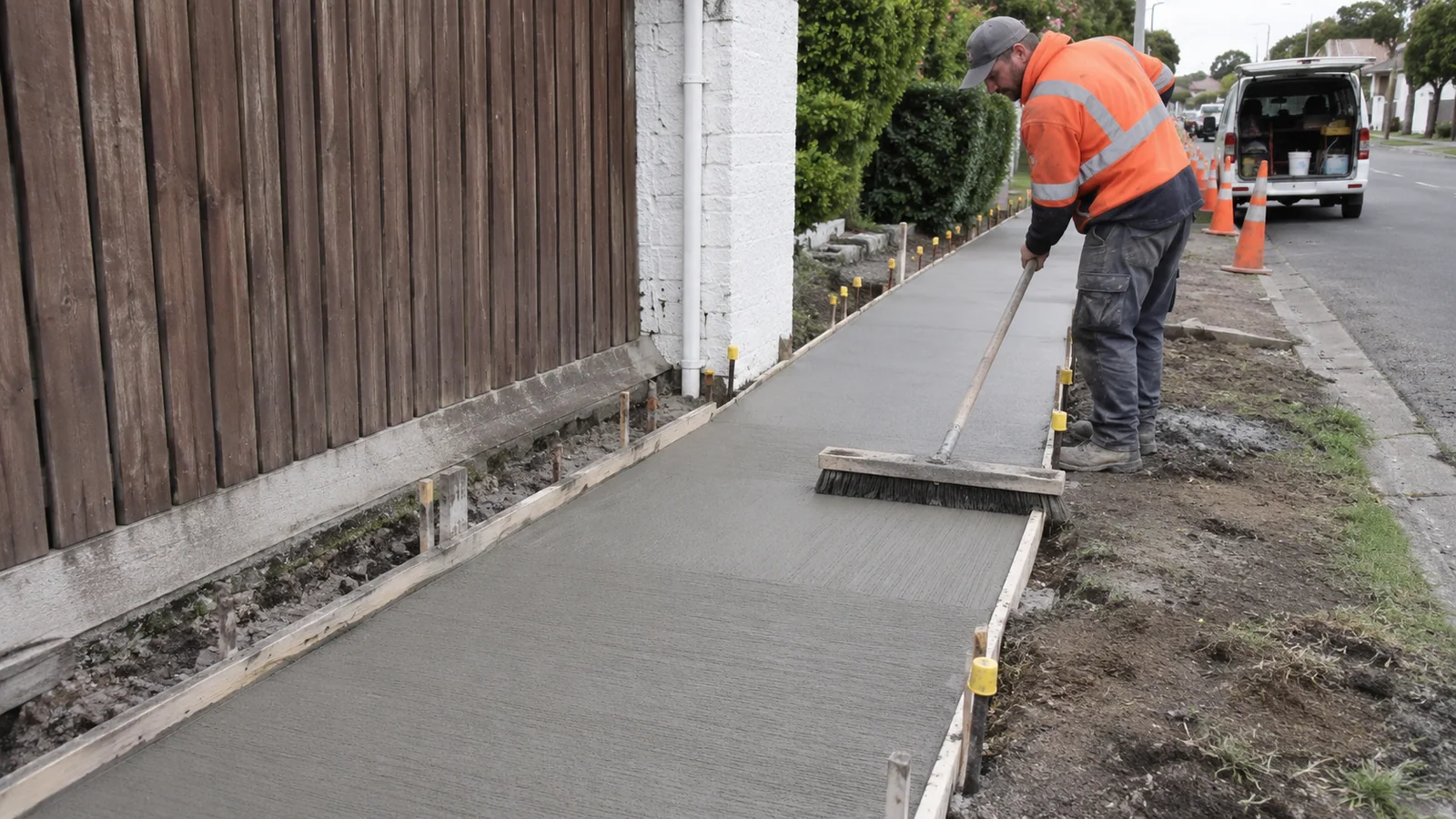
Smooth, slip-resistant concrete footpaths with correct drainage crossfalls, kerb ramps, tactile indicators and tidy council-standard reinstatement, delivered safely and efficiently with minimal disruption to pedestrians, residents, traffic and neighbouring properties.
Get A Free Footpaths EstimateGradients, crossfalls and ramps built to council and accessibility requirements.
Textures that help reduce risk on wet or icy mornings.
Safe site management that protects pedestrians, traffic and neighbouring properties.
Footpaths seem straightforward, yet they are public safety infrastructure, and councils expect them to meet clear standards. Width, thickness and crossfall are specified so water drains away and people can walk comfortably, while kerb ramps and tactile indicators ensure access for everyone. Work within the road reserve also involves approvals, traffic management and protection of services and trees. Reinstating the area properly afterwards is part of the job. The requirements below summarise the typical dimensions, concrete, accessibility and council rules that apply to concrete footpaths in Dunedin, helping you plan subdivision and streetscape work with confidence.
Council footpaths are commonly 100 millimetres thick, with widths set by council standards and crossfalls typically around two percent, providing drainage while remaining safe for walkers.
Footpaths typically use around 20 to 25 megapascal concrete with broom finishes, plus kerb ramps and tactile indicators built to the council's accessibility standards and NZTA guidance.
Work in the road reserve needs council approval, traffic management and corridor access requests, with protection of services, trees and neighbouring property, and reinstatement to specification.
Helpful guidance for planning a durable concrete project in Dunedin.
Council footpaths are commonly 100 millimetres thick, with widths set by council standards. They typically use around 20 to 25 megapascal concrete with a broom finish for grip. Driveway crossings and areas with vehicle loading are usually thicker, so check the council drawings for your specific site for your site.
A crossfall, typically around two percent, lets rainwater drain sideways off the surface instead of pooling, which reduces slipping and ice risk. It is a gentle slope that remains comfortable for walkers, including people using wheelchairs or prams, and is checked against the design levels during construction and final inspection.
Kerb ramps give a smooth transition between footpath and road for wheelchairs, prams and mobility scooters, while tactile indicators are textured surfaces that warn people with vision impairments of crossings. Both are built to the council's accessibility standards and NZTA guidance, so positions and gradients follow set requirements as well.
Yes, work in the road reserve needs council approval, traffic management and a corridor access request. Services, trees and neighbouring property must be protected, and the area reinstated to specification afterwards, as agreed. Private footpaths within your own boundary generally have fewer approval requirements, though other consent conditions may apply.
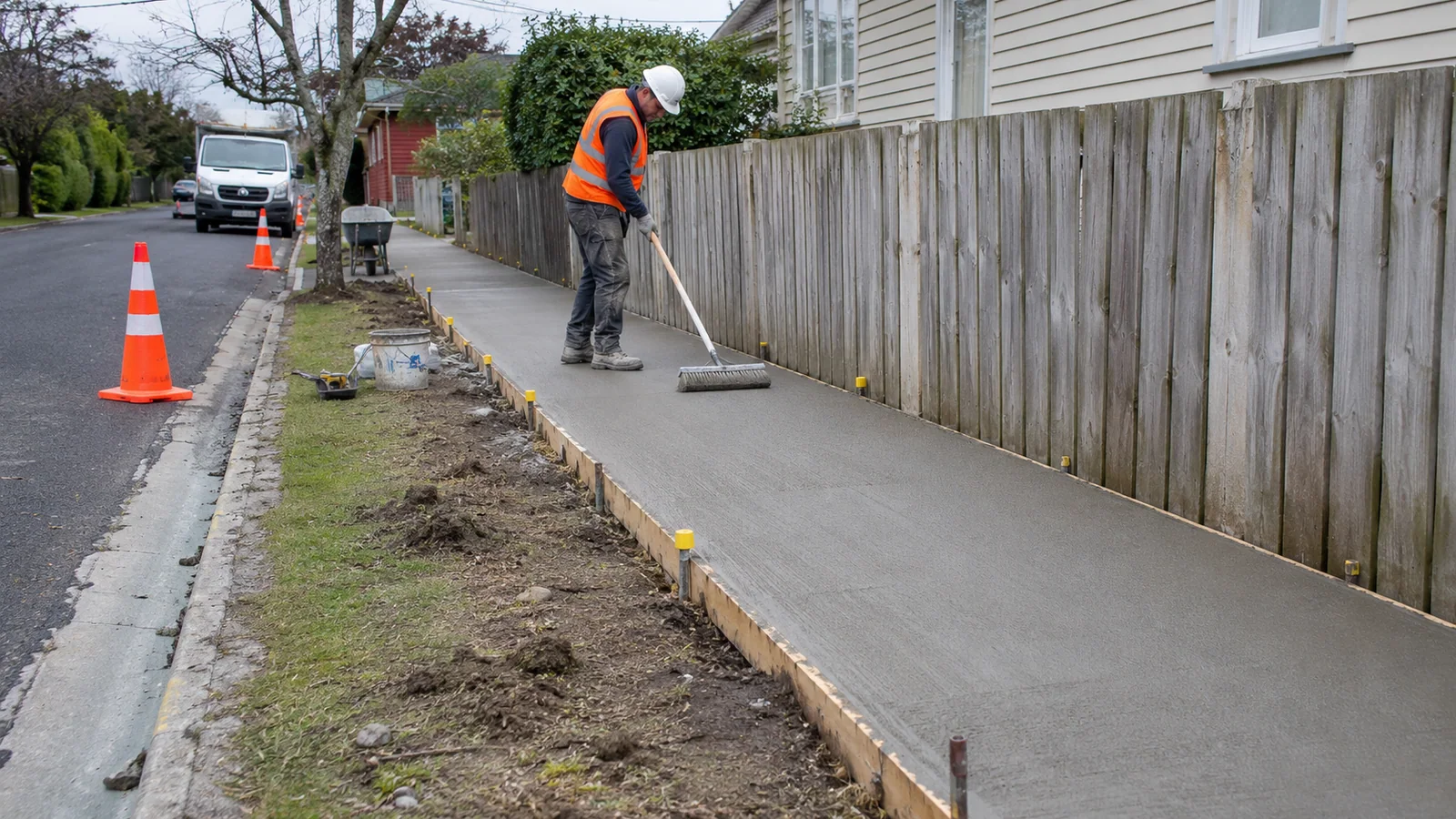
Tell us about your project and our local Dunedin team will come back with practical advice, clear pricing and a free, no-obligation quote, so you can move forward with confidence.
Get A Free Estimate