Underground Detention Tanks
Reinforced cast-in-place and precast tanks installed below car parks, roads and buildings, storing stormwater safely while preserving valuable usable space above your development for parking or landscaping.
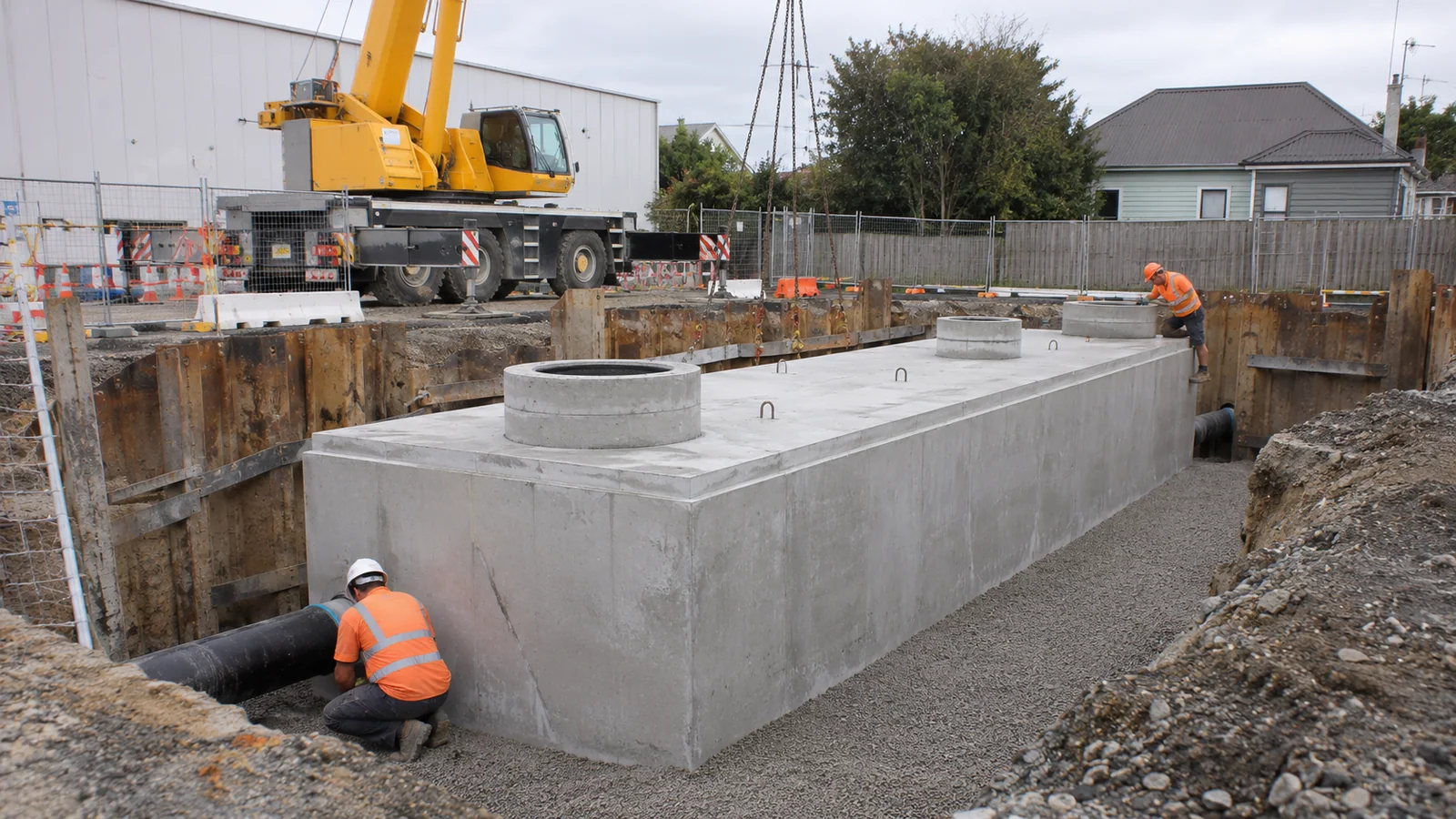
Concrete stormwater detention tanks that hold and release runoff in a controlled way.
Stormwater detention tanks in Dunedin help developments manage runoff by storing water during heavy rain and releasing it slowly into the network, reducing flooding risk and meeting council requirements. We construct concrete detention tanks, including precast and cast-in-place designs, working from your engineer's drawings and approved stormwater plans. Orifice details, outlet levels, overflow structures and access openings must all match the design exactly, so we check and document each stage.
Excavation, shoring and groundwater control are planned carefully, especially on Dunedin's sloping and low-lying sites. Watertight construction, reinforcement and sealing protect performance for decades. We coordinate inspections with engineers and councils at each hold point, so your system is approved and handed over without delay.
With clear communication and thorough records, we deliver detention systems that satisfy engineers, councils and certifiers, helping your project progress to approval without avoidable delays.
Reinforced cast-in-place and precast tanks installed below car parks, roads and buildings, storing stormwater safely while preserving valuable usable space above your development for parking or landscaping.
Excavation, bedding, placing and sealing of precast detention units, completed accurately and efficiently to the approved designs, reducing construction time and keeping your overall site program moving.
Custom reinforced concrete tanks formed on your site for unusual shapes, large volumes or restricted access, built watertight with proper joints, waterstops and sealing that keep groundwater out.
Accurately formed outlet pits, orifice details and overflow structures built to the design discharge rates, helping your site satisfy council limits on stormwater leaving the property.
Properly sized access openings, step irons and heavy-duty covers that allow safe inspection and cleaning, supporting regular ongoing maintenance and your council's compliance and reporting requirements.
Inspection, sealing, crack repair and upgrades for existing underground tanks, restoring watertightness and capacity so your stormwater system continues to meet design, performance and council requirements.
Detention tanks have to match the approved design exactly, because outlet levels, orifice details and overflow structures all affect council approval. We construct precast and cast-in-place concrete tanks with watertight joints, waterstops and correctly formed access points, working from your engineer's drawings. Excavation, shoring and groundwater control are planned carefully, especially on Dunedin's sloping and low-lying sites. We coordinate inspections with engineers, certifiers and councils and keep thorough as-built records. Early communication with engineers and council officers helps us confirm outlet details before excavation starts. You receive a reliable detention system that is approved and handed over without unnecessary delays.
Get A Free Estimate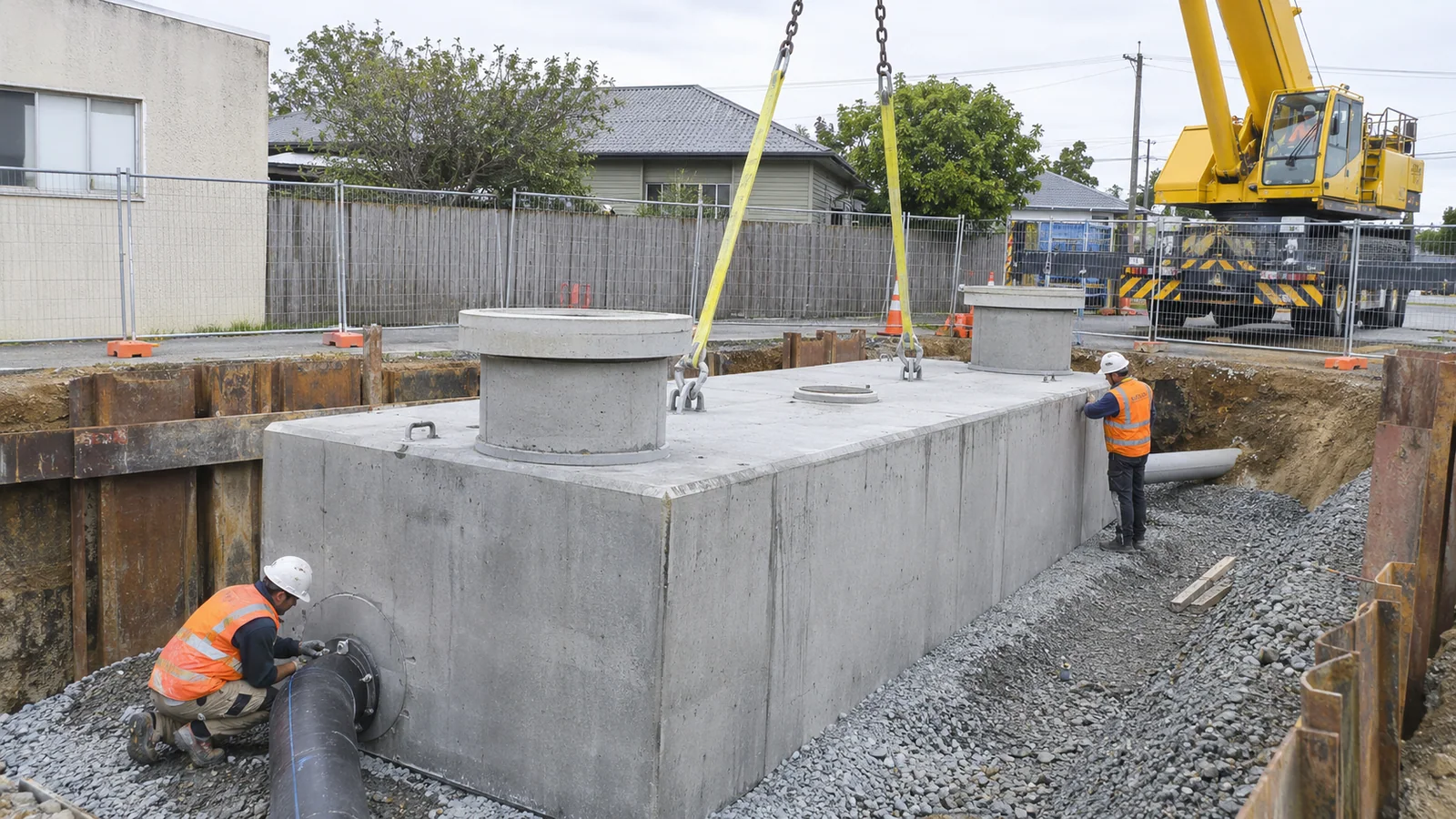
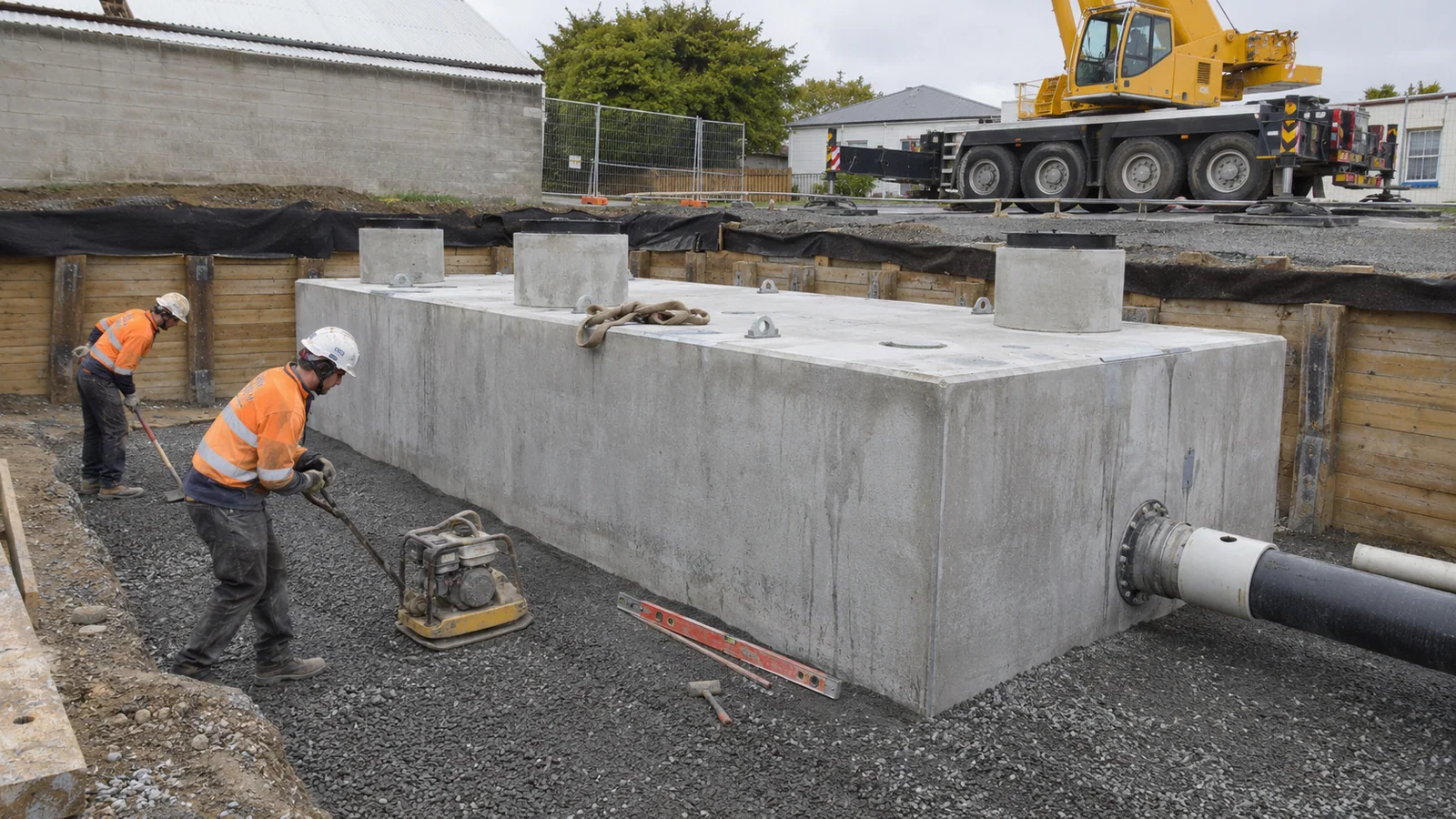
Reinforced concrete detention tanks built exactly to approved designs, with watertight joints, accurate outlets, overflow structures and thorough records that help your project achieve council approval without any avoidable delays.
Get A Free Stormwater Detention Tanks EstimateOutlets, orifices and overflows formed accurately to meet council limits.
Quality concrete, joints and sealing that keep your tank performing for decades.
Records and inspections that help certifiers accept the system.
A stormwater detention tank holds runoff during heavy rain and releases it slowly, helping a development avoid overloading the public network. Because it works by volume and outlet size, precision is everything, and even small errors in levels or orifice dimensions can affect council acceptance. The concrete must also be watertight and strong enough for ground, groundwater and sometimes traffic loads. Access for maintenance and confined space safety are further considerations. The requirements below explain the typical storage, concrete, approval and safety expectations for concrete stormwater detention tanks in Dunedin, giving you a clear picture before design is finalised.
Tank volume, outlet orifice size and overflow levels follow approved stormwater design to limit peak discharge, with dimensions and levels checked because small errors affect acceptance.
Tanks typically use 32 to 40 megapascal concrete with waterstops, sealed joints and controlled cracking, designed to NZS 3101 for ground and groundwater loads, including traffic loading.
Detention systems need council approval, with maintenance access, entry provisions and as-built records supplied, and WorkSafe controls for confined spaces, excavation, shoring and lifting precast units.
Helpful guidance for planning a durable concrete project in Dunedin.
It stores runoff during heavy rain and releases it slowly through a small outlet, so the public network isn't overloaded at the peak of a storm. Tank volume, outlet orifice size and overflow levels follow the approved stormwater design, so the dimensions must be built accurately for the site itself.
Tanks typically use 32 to 40 megapascal concrete with waterstops, sealed joints and controlled cracking. They are designed to NZS 3101 for ground and groundwater loads, including traffic loading where vehicles cross the top. Watertightness matters, because leaks can affect both performance and council acceptance and passes inspection without rework.
Yes, detention systems need council approval, with maintenance access, entry provisions and as-built records supplied. Even small errors in levels or outlet dimensions can affect acceptance, so dimensions are checked closely. Your engineer's design and the council's requirements guide what documents must be provided at completion for your tank design.
WorkSafe controls apply to confined spaces, excavation, shoring and lifting precast units. Deep excavations need proper support, and entry to completed tanks must be planned for maintenance. These requirements affect programme and cost, so they are considered at the design stage rather than left to site for your project overall.
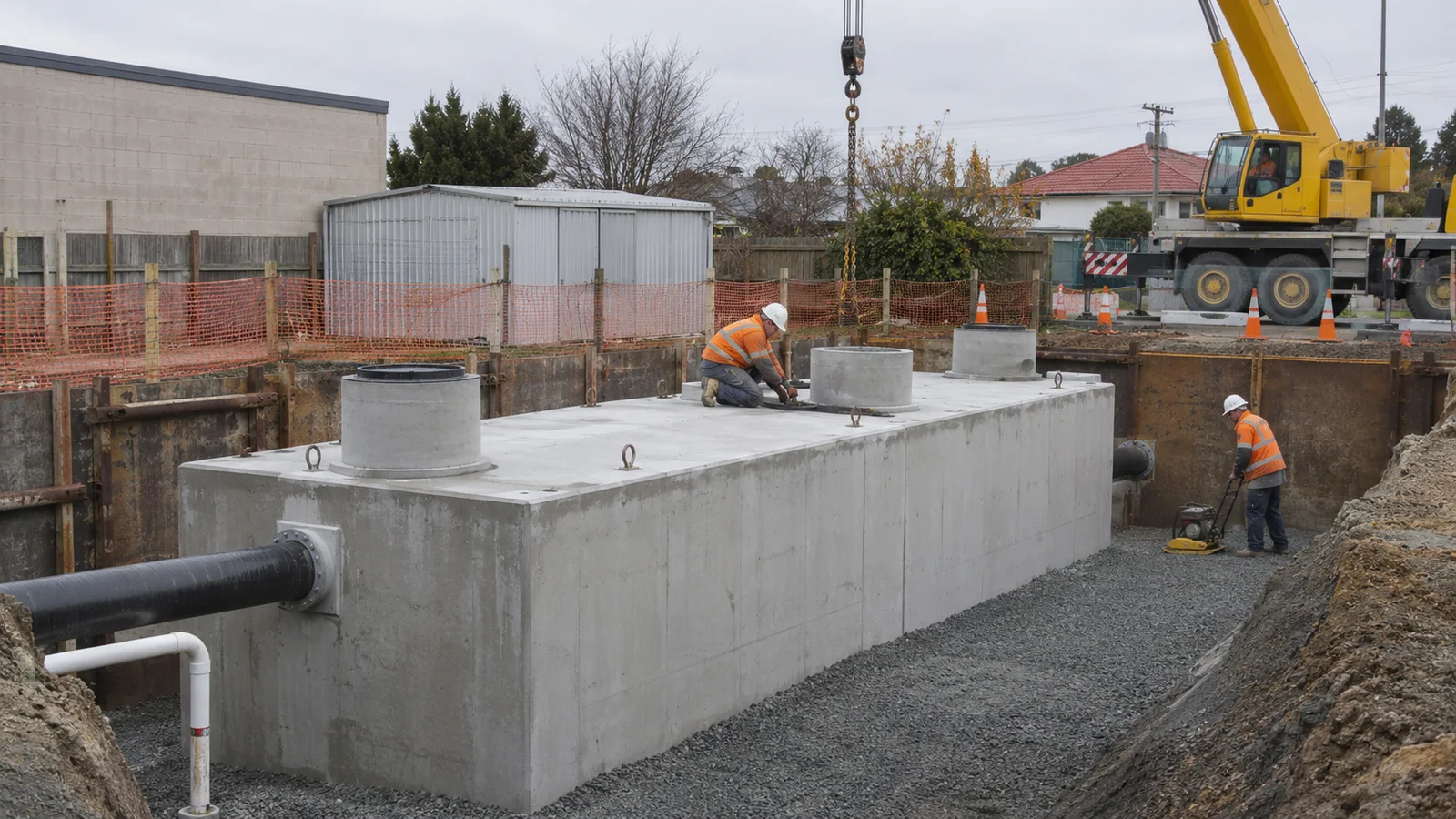
Tell us about your project and our local Dunedin team will come back with practical advice, clear pricing and a free, no-obligation quote, so you can move forward with confidence.
Get A Free Estimate