Subgrade Trimming and Compaction
Trimming and compaction of exposed ground to design levels using suitable rollers and compaction plant, producing a firm, even, stable subgrade for slabs, pavements and hardstands.
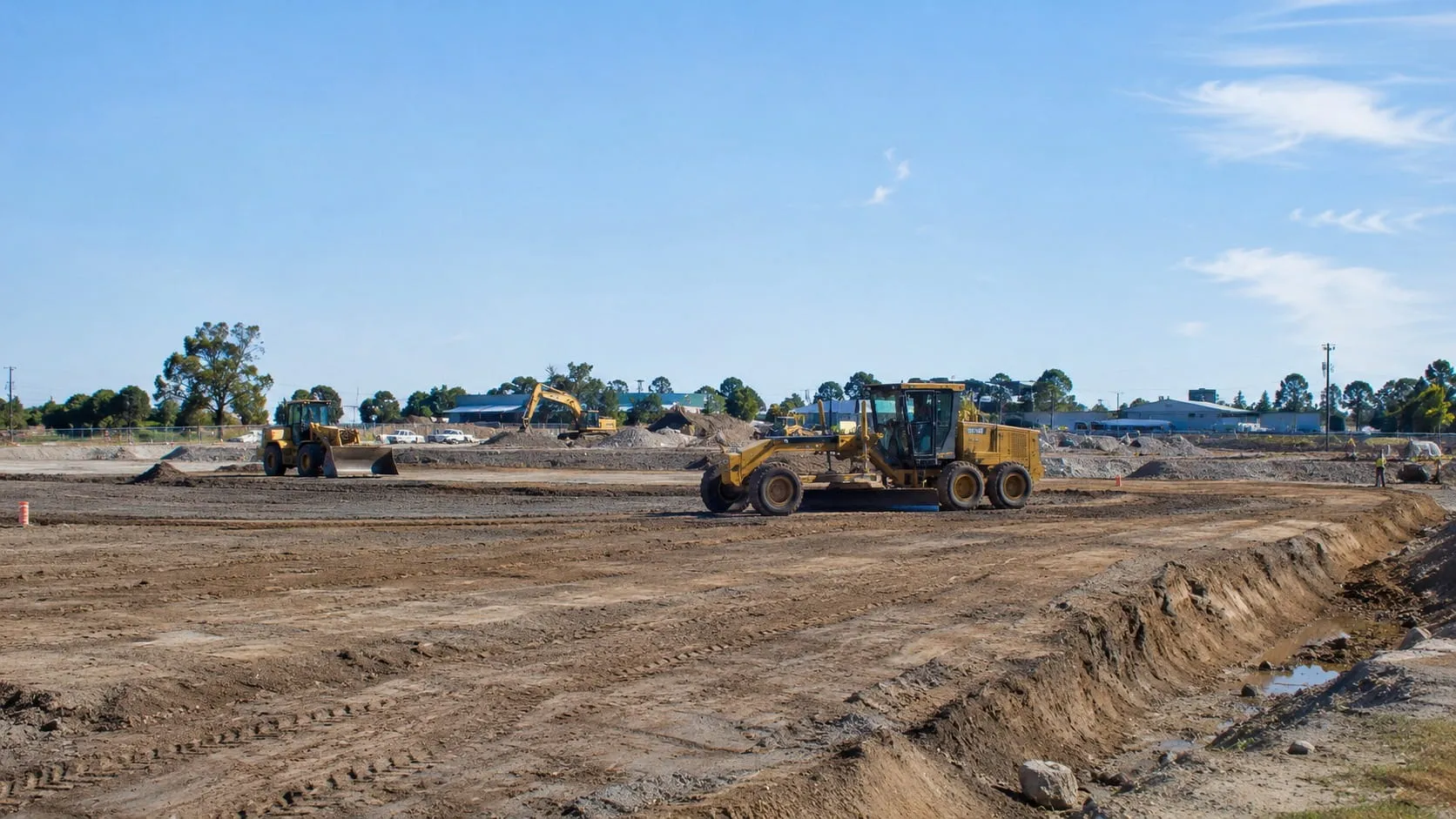
Subgrade preparation and compaction for slabs, driveways, roads and hardstands, so the concrete above is properly supported.
Subgrade preparation in Dunedin is one of the most important steps in building durable slabs, roads, car parks and hardstands, because even the best concrete will fail if the ground below is weak or poorly compacted. We trim, stabilise and compact subgrades to engineered specifications, removing unsuitable material and replacing it with quality fill or base course where needed.
Dunedin's variable soils, high rainfall and freezing temperatures can all affect ground performance, so moisture control and drainage receive close attention. Density testing and level checks are completed before concrete is placed, giving you confidence in the foundation.
Our crews check levels and falls before leaving each area, so concrete trades can start without delay. By combining our earthworks plant with concrete construction expertise, we reduce handovers between trades and deliver a stable, even platform that protects your pavement for years.
Trimming and compaction of exposed ground to design levels using suitable rollers and compaction plant, producing a firm, even, stable subgrade for slabs, pavements and hardstands.
Identification and removal of soft, wet, weak or unsuitable material, replaced with compacted fill or hardfill so concrete is supported by consistent, reliable ground throughout.
Stabilisation methods, including quality fill, geotextile and improved base layers where specified, strengthening weak or soft ground and reducing movement, settlement and cracking in your finished concrete pavement.
Placement and compaction of crushed rock base courses in controlled layers to specified thicknesses, creating a strong platform that distributes loads evenly beneath concrete and asphalt surfaces.
Drainage, moisture control and protection measures suited to Dunedin's wet, freezing winter conditions, helping prevent frost damage, softening, heaving and pumping beneath concrete slabs and pavements.
Density testing, level checks and survey records completed and verified before concrete is placed, giving engineers and builders documented confidence in the foundation beneath your project.
Even the best concrete fails when the ground beneath it is weak, wet or poorly compacted. We trim, stabilise and compact subgrades to engineered specifications, removing unsuitable material and replacing it with quality fill or base course. Dunedin's variable soils, high rainfall and freezing temperatures all affect ground performance, so we give moisture control and drainage close attention. Density testing and level checks are completed before concrete is placed, giving you documented confidence. We check levels before leaving, so concrete trades can start immediately. Because we combine earthworks plant with concrete expertise, there are fewer handovers between trades and a more reliable result.
Get A Free Estimate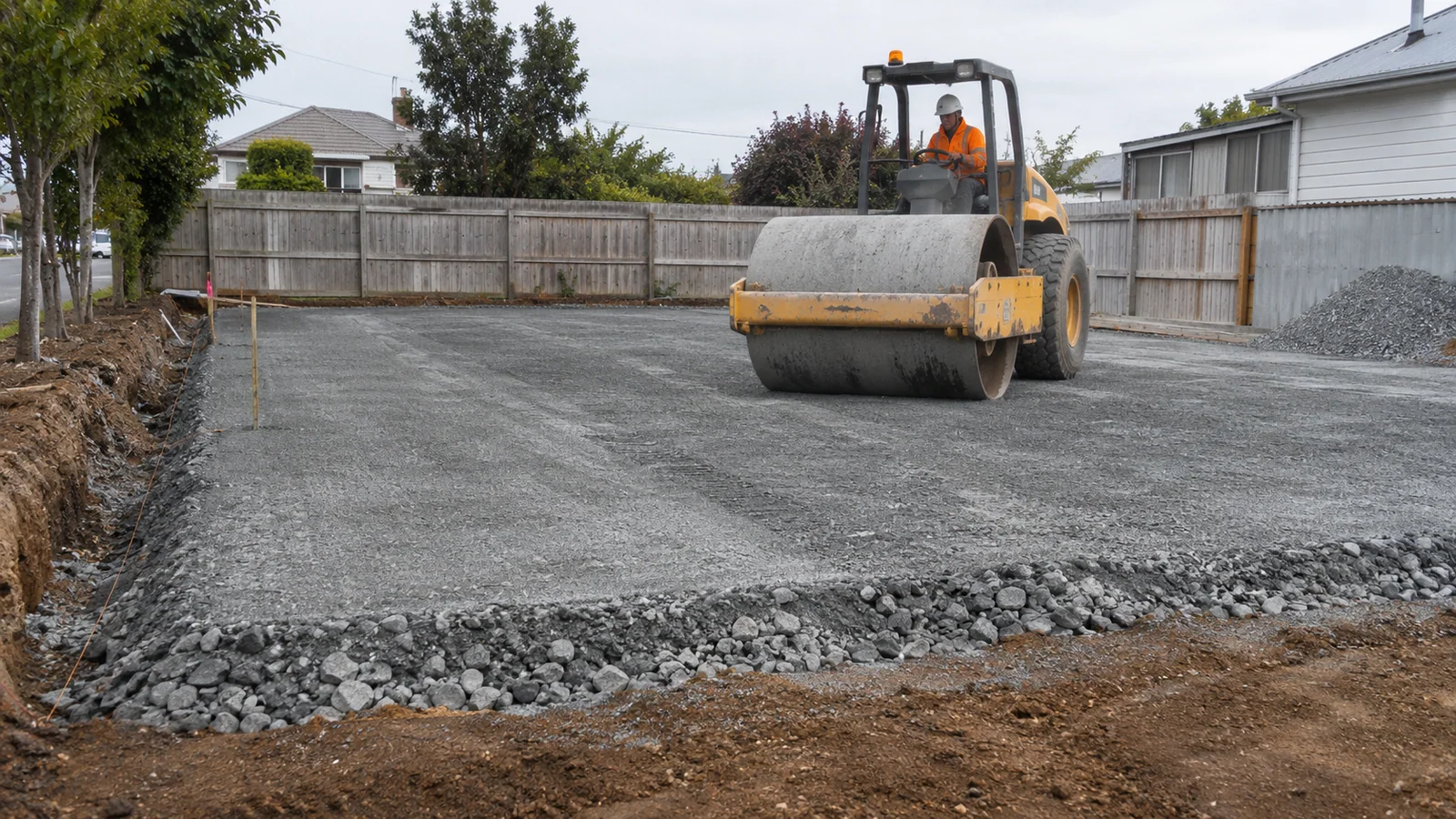
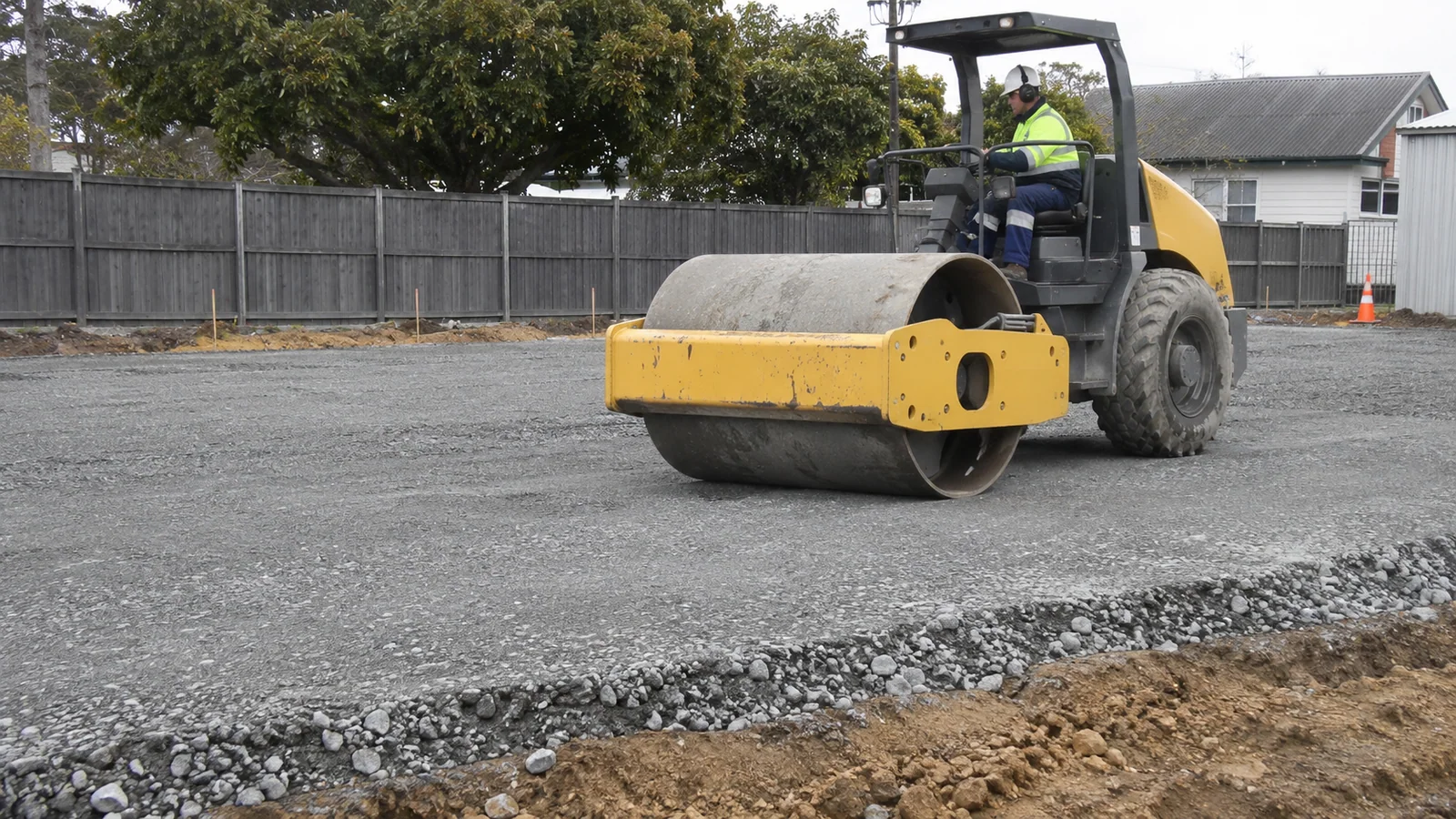
Trimmed, compacted and tested subgrades with soft or wet spots removed and drainage and moisture managed, giving your slabs, pavements and hardstands the consistent support they need to last longer.
Get A Free Subgrade EstimateWeak or wet ground identified, removed and replaced with compacted fill.
Drainage and protection suited to Dunedin's wet, freezing conditions.
Level and density records completed before concrete is placed.
The subgrade is the prepared ground directly beneath a slab, driveway or pavement, and its condition largely determines how well the concrete above performs. Soft spots, poor compaction or trapped moisture can cause settlement and cracking, even in a well-designed slab. For this reason subgrades are compacted, tested and checked for levels before a basecourse of crushed rock is placed. Engineers often sign off the work before concrete is poured. This section summarises the typical compaction, basecourse and testing requirements for subgrade preparation in Dunedin, so you understand why this hidden layer deserves so much attention.
Subgrades are compacted to specified density, commonly a high percentage of maximum dry density, with stiffness tested, so concrete and pavements receive consistent support and avoid settlement.
Basecourse is typically 100 to 200 millimetres of compacted rock, placed in layers to specified levels, improving load distribution, drainage and frost resistance beneath slabs, hardstands and pavements.
Level surveys, density tests and visual inspections are completed before concrete is placed, with engineer sign-off and records supporting building consent and council acceptance, especially for roads.
Helpful guidance for planning a durable concrete project in Dunedin.
Concrete is only as good as the ground supporting it. A subgrade compacted to the specified density gives consistent support, which helps avoid settlement and cracking. Poorly prepared or uneven ground can lead to weak spots, so compaction and testing happen before any basecourse or concrete goes down on top.
Basecourse is typically 100 to 200 millimetres of compacted rock, placed in layers to specified levels. It spreads loads, improves drainage and helps resist frost beneath slabs, hardstands and pavements. The exact thickness depends on the loads and the ground, so always follow your engineer's or designer's written design specification.
Weak or wet ground is identified, removed and replaced with compacted fill, rather than simply being covered over. Leaving soft spots under concrete risks settlement and cracking later on. Where the problem is widespread, drainage improvements or an engineer's advice may be needed before the rest of the work continues.
Level surveys, density tests and visual inspections are completed before concrete is placed. Stiffness is tested too. For many projects an engineer signs off the results, and the records support building consent and council acceptance, which is especially important for roads and other public work such as hardstands or yards.
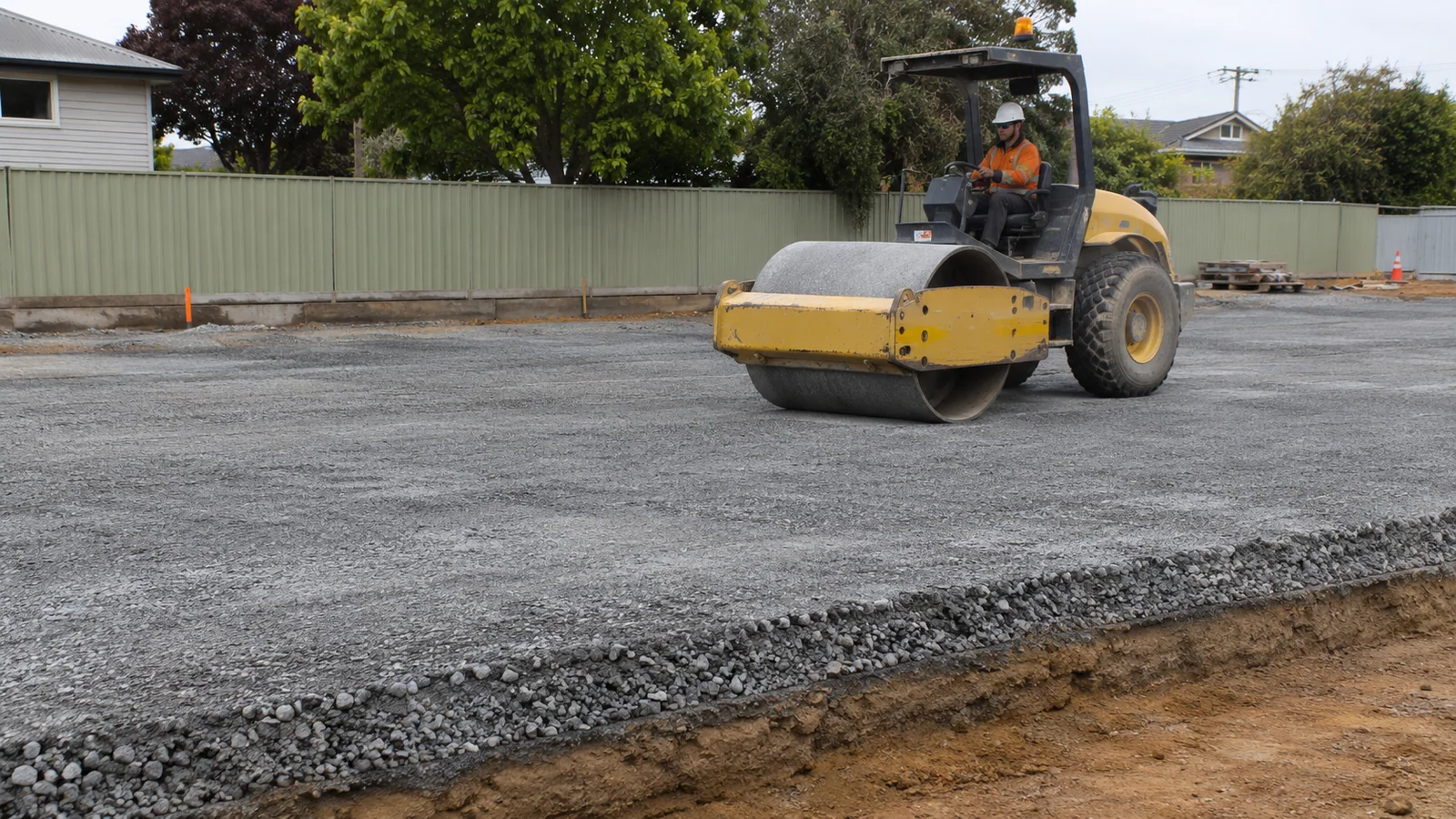
Tell us about your project and our local Dunedin team will come back with practical advice, clear pricing and a free, no-obligation quote, so you can move forward with confidence.
Get A Free Estimate