Kerb and Channel
Machine-extruded and hand-formed kerb and channel built to council and developer profiles, giving roads, estates and commercial sites clean, durable edges and reliable stormwater flow towards pits.
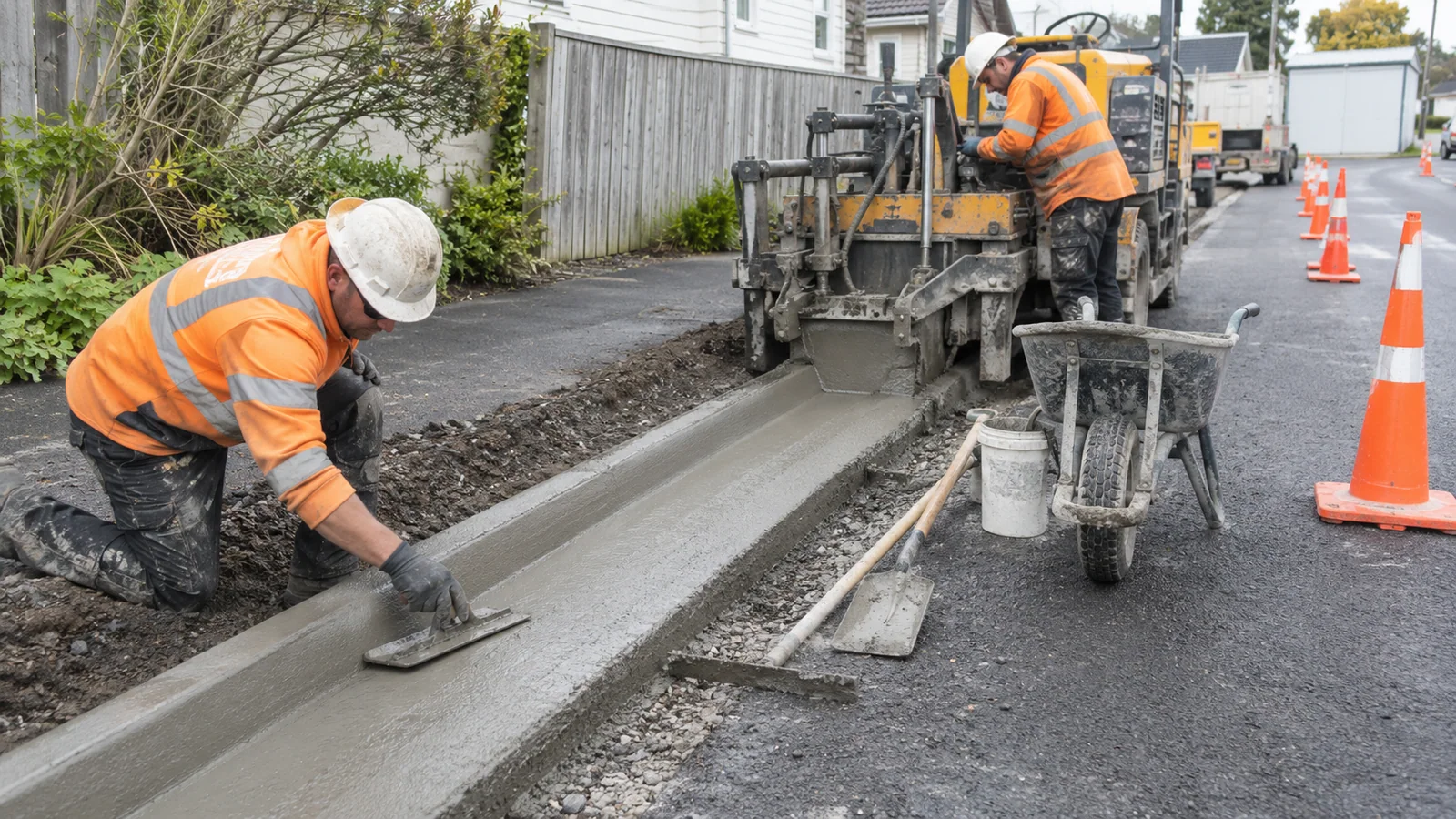
Kerb and channel for roads, subdivisions, car parks and commercial sites, laid to line and level.
Concrete kerbing in Dunedin shapes how roads, car parks and subdivisions drain, look and function, and it protects pavement edges from traffic and weather. We construct kerb and channel to council and developer specifications, using machine-extruded and hand-formed methods to suit each project. Accurate setout is critical, because small errors in level can cause ponding, which becomes a slip and ice hazard in Dunedin's cold winters.
We also build crossings, kerb ramps and pram crossings with the correct gradients for accessibility. Our crews work efficiently alongside earthworks and paving teams, keeping your program on track and your site tidy. We protect new kerbs during curing and reinstate surrounding areas neatly, so your work stays clean and ready for final inspection.
The result is clean, consistent, durable kerbing that passes inspection, directs stormwater properly and gives your project a professional finish.
Machine-extruded and hand-formed kerb and channel built to council and developer profiles, giving roads, estates and commercial sites clean, durable edges and reliable stormwater flow towards pits.
Barrier, semi-mountable and mountable kerbs selected to suit traffic, access and design requirements, helping control vehicles, protect pedestrians and define driveways and crossovers throughout the development.
Accurately formed medians, traffic islands and roundabout kerbs that guide vehicles safely, reinforce road layouts and create attractive, long-lasting features within large commercial and civil developments.
Crossings, kerb ramps and pram crossings built to correct gradients and widths, supporting pedestrian access, vehicle entry and council inspection requirements on your next project.
Neat, consistent kerbing around car parks, garden beds and loading areas that defines traffic paths, protects landscaping and gives commercial sites a tidy, professional finish.
Removal and replacement of damaged kerb, channel and crossings, tied neatly into existing surfaces, restoring drainage, safety and appearance with minimal disruption to traffic and neighbours.
Good kerbing shapes how a road, car park or subdivision looks, drains and performs. We build kerb and channel to council and developer specifications, using machine-extruded and hand-formed methods to suit each project. Accurate setout is critical in Dunedin, where ponding can become an ice hazard in winter, so we check levels carefully throughout. Our crews work efficiently alongside earthworks and paving teams, keep sites tidy and arrange inspections in advance. We protect new kerbs during curing and reinstate surrounding areas neatly afterwards. You receive clean, consistent kerbing that passes inspection first time and keeps stormwater moving as designed.
Get A Free Estimate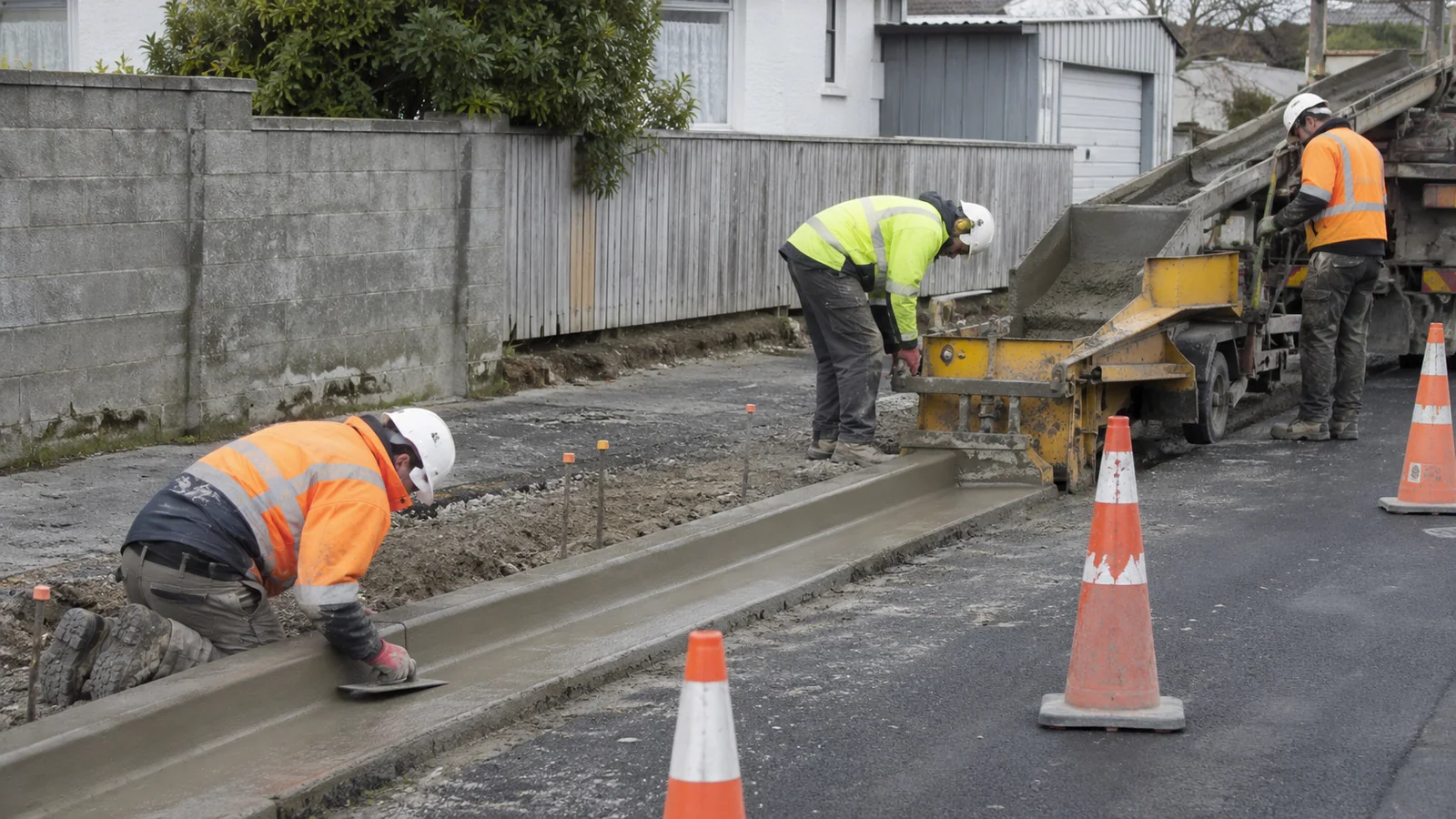
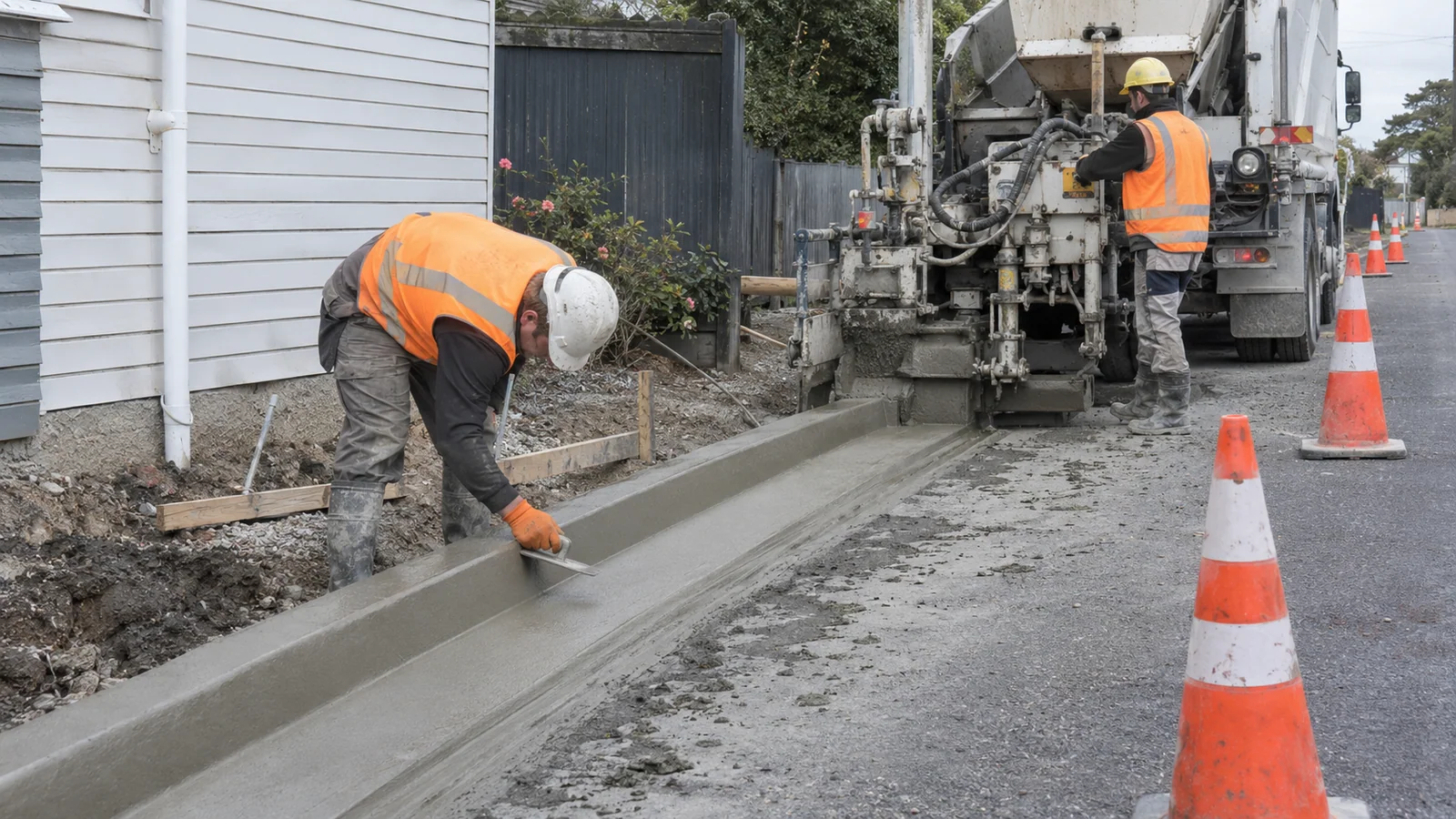
Machine-extruded and hand-formed concrete kerb and channel built to council profiles, with accurate levels and clean finishes that keep stormwater flowing and help your project pass council inspection first time.
Get A Free Concrete Kerbing EstimateMachine-extruded and hand-formed kerbs for long runs, curves and complex junctions.
Survey-based setout that keeps water flowing to pits and avoids ponding.
Crossings and pram ramps built to correct gradients and widths.
Kerb and channel guide traffic, direct stormwater and define the edge of roads, car parks and subdivisions, so consistency matters as much as strength. Profiles, heights and widths usually follow council drawings, and levels must be accurate for water to flow properly. Contraction joints, compaction and the right concrete mix help kerbing survive traffic and Dunedin's winter freeze-thaw cycles. Work in public areas also needs approval, inspection and traffic management. This section outlines the typical profile, concrete, jointing and council requirements for concrete kerbing in Dunedin, so you know what to expect from design through to final inspection.
Kerb and channel profiles, heights and widths follow council drawings, with barrier and mountable kerbs specified by location, so capacity and vehicle control meet design requirements.
Kerbs typically use 25 megapascal concrete, with contraction joints at regular spacing and consistent compaction, producing durable edges that resist traffic, weather and winter freeze-thaw cycles.
Public kerb work requires council approval and inspection, with levels, crossings and ramps checked against the code of subdivision and development, and traffic management plans for live roads.
Helpful guidance for planning a durable concrete project in Dunedin.
Barrier kerb is taller and designed to keep vehicles off footpaths and landscaping, while mountable kerb is lower and sloped so vehicles can cross it, such as at driveways. Which profile goes where is normally set by the council drawings for your road, car park or subdivision in your location.
Kerbs typically use 25 megapascal concrete, placed with consistent compaction and contraction joints at regular spacing. That combination helps the edge resist traffic loads, weather and Dunedin's winter freeze-thaw cycles, so the kerb keeps its line and level and doesn't crack or chip prematurely for many years of reliable service.
Yes, public kerb work generally needs council approval and inspection. Levels, crossings and ramps are checked against the code of subdivision and development, and live roads usually need a traffic management plan. Private car park kerbing is simpler, though your consent conditions or engineer may still set requirements first, too.
Kerb and channel carry stormwater to pits and outlets, so even small level errors can leave puddles or send water where it shouldn't go. Laying to accurate line and level keeps the channel falling consistently, which is why surveyed levels are checked before and after the concrete goes in overall.
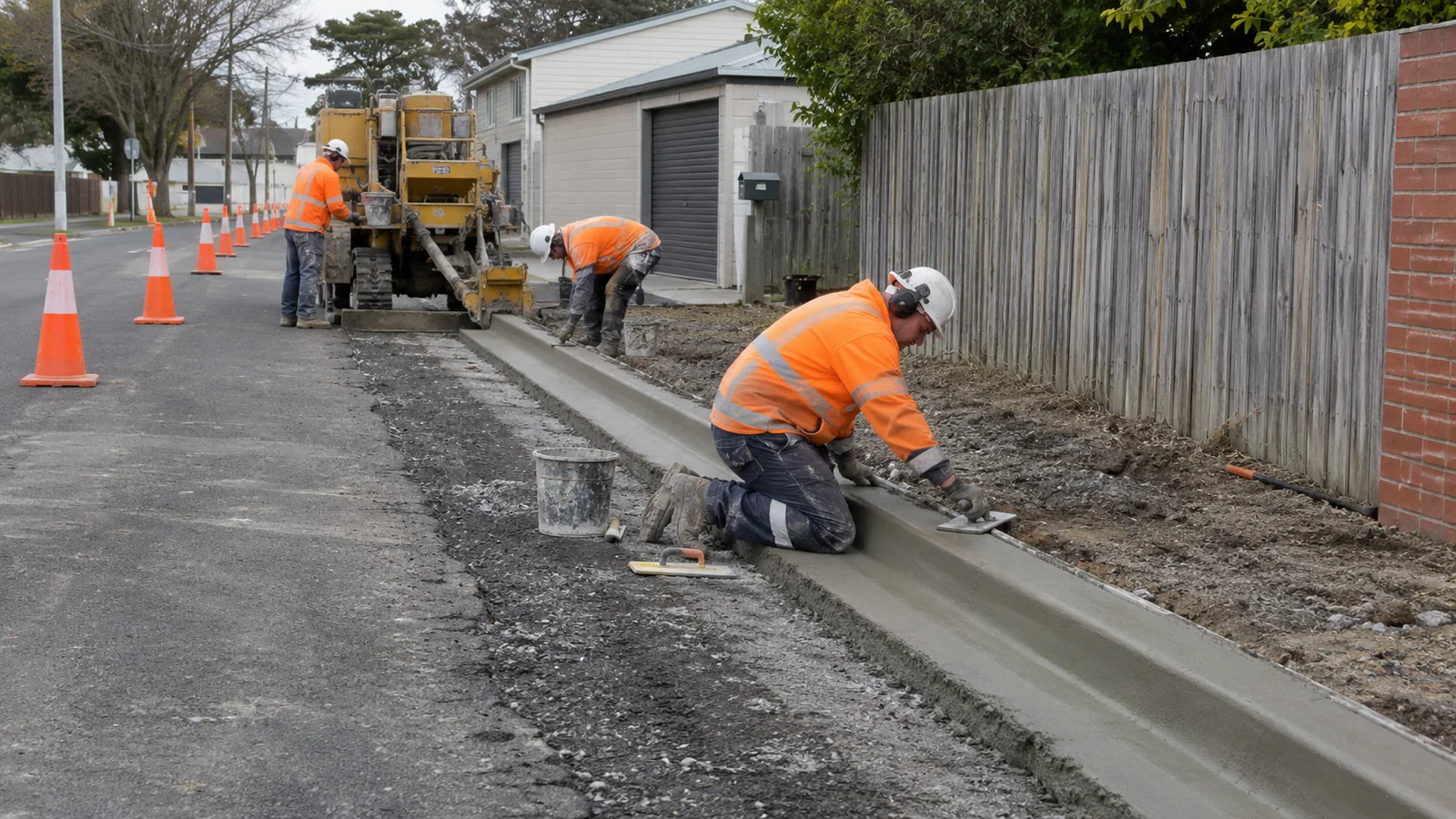
Tell us about your project and our local Dunedin team will come back with practical advice, clear pricing and a free, no-obligation quote, so you can move forward with confidence.
Get A Free Estimate