Bored Concrete Piles
Drilled, reinforced and concrete-filled piles that reach competent ground, providing reliable support for commercial buildings, retaining structures and heavily loaded industrial projects on soft or variable soils.
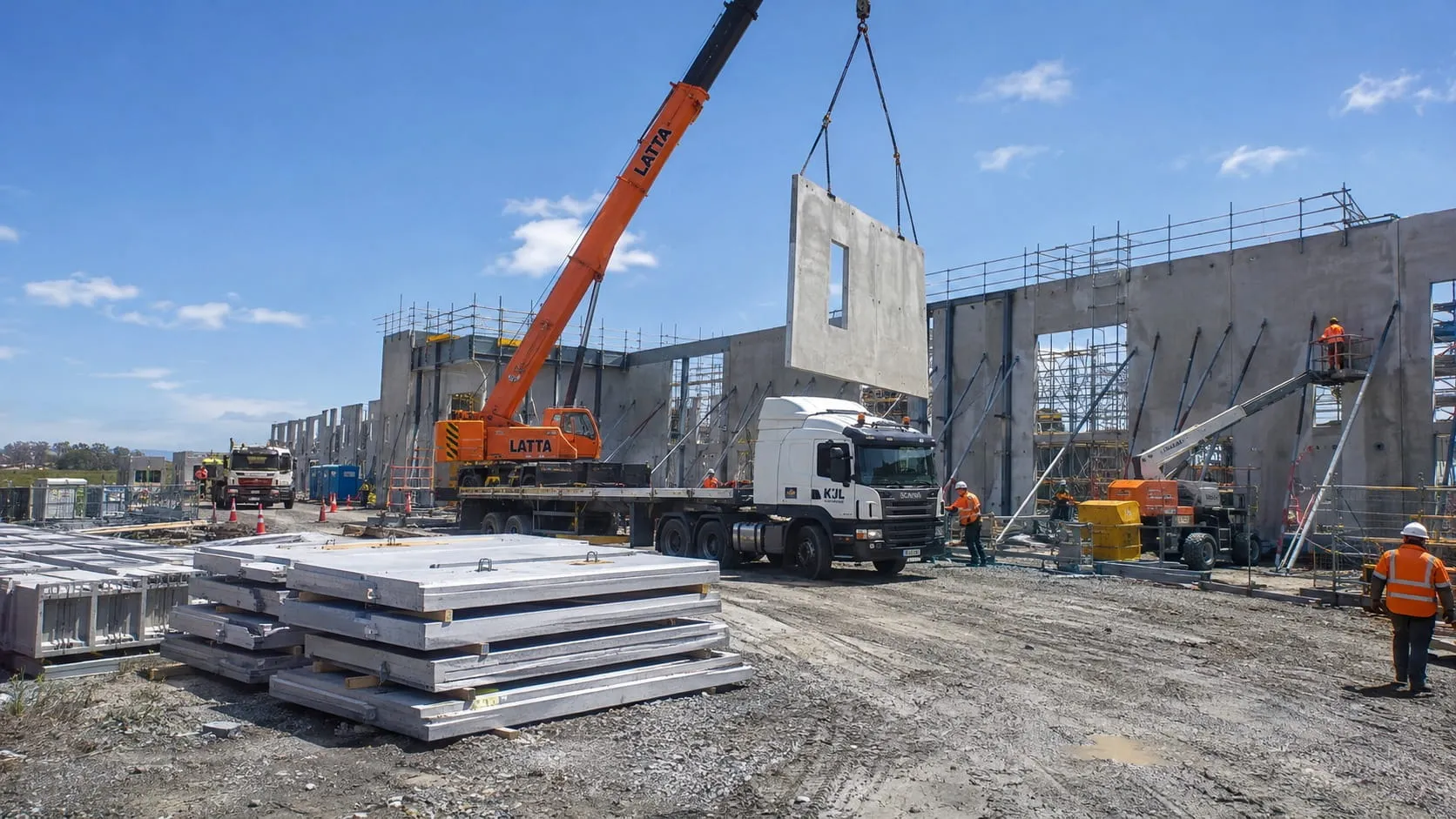
Concrete piles for sites that need load transferred to deeper, more stable ground.
Concrete piles in Dunedin provide deep, reliable support where ground conditions are soft, sloping or variable, and they are widely used for commercial buildings, bridges, retaining structures and large industrial projects. Our team builds bored and cast-in-place piles to your engineer's design, managing drilling, reinforcement cage installation, concrete placement and testing. Because Dunedin's geology can change quickly across a site, accurate records and close coordination with geotechnical engineers are essential.
We locate underground services, protect adjoining property and manage spoil and groundwater carefully. Safe work practices apply throughout, including exclusion zones and plant controls under WorkSafe requirements. We keep accurate pile records, including depths, concrete volumes and any ground variations, so your engineer can confirm each pile.
The result is a strong, well-documented pile foundation that supports your structure with confidence and gives your project a dependable base for decades.
Drilled, reinforced and concrete-filled piles that reach competent ground, providing reliable support for commercial buildings, retaining structures and heavily loaded industrial projects on soft or variable soils.
Piles formed in drilled holes with reinforcement cages and quality concrete, managed carefully to maintain pile integrity, concrete quality and correct depth throughout construction, with full records kept.
Accurate records of depths, concrete volumes, reinforcement and ground conditions, plus coordination of testing, so your engineer can confirm each pile meets the specified design requirements.
Pile solutions for retaining walls and slope stabilisation, giving steep Dunedin sites reliable support against soil pressure, movement and water, with strong, long-lasting reinforced concrete construction.
Trimming of pile heads and preparation for caps and ground beams, ensuring reinforcement connects correctly so loads transfer safely from structure to each pile.
Controlled drilling, dewatering, spoil removal and site protection, helping piling proceed safely and cleanly in wet ground while protecting neighbours, services and the surrounding natural environment.
Piling needs careful planning, precise execution and thorough records, because the finished work is hidden below ground. We build bored and cast-in-place concrete piles to your engineer's design, managing drilling, reinforcement cages, concrete placement and testing coordination. Dunedin's geology can change quickly across a site, so we communicate closely with geotechnical engineers and record ground conditions as work progresses. Services location, spoil management and neighbour protection are planned before drilling starts. We keep your engineer informed, with records kept throughout every stage. Our crews follow WorkSafe requirements, giving you a dependable foundation and a project that stays safe and organised.
Get A Free Estimate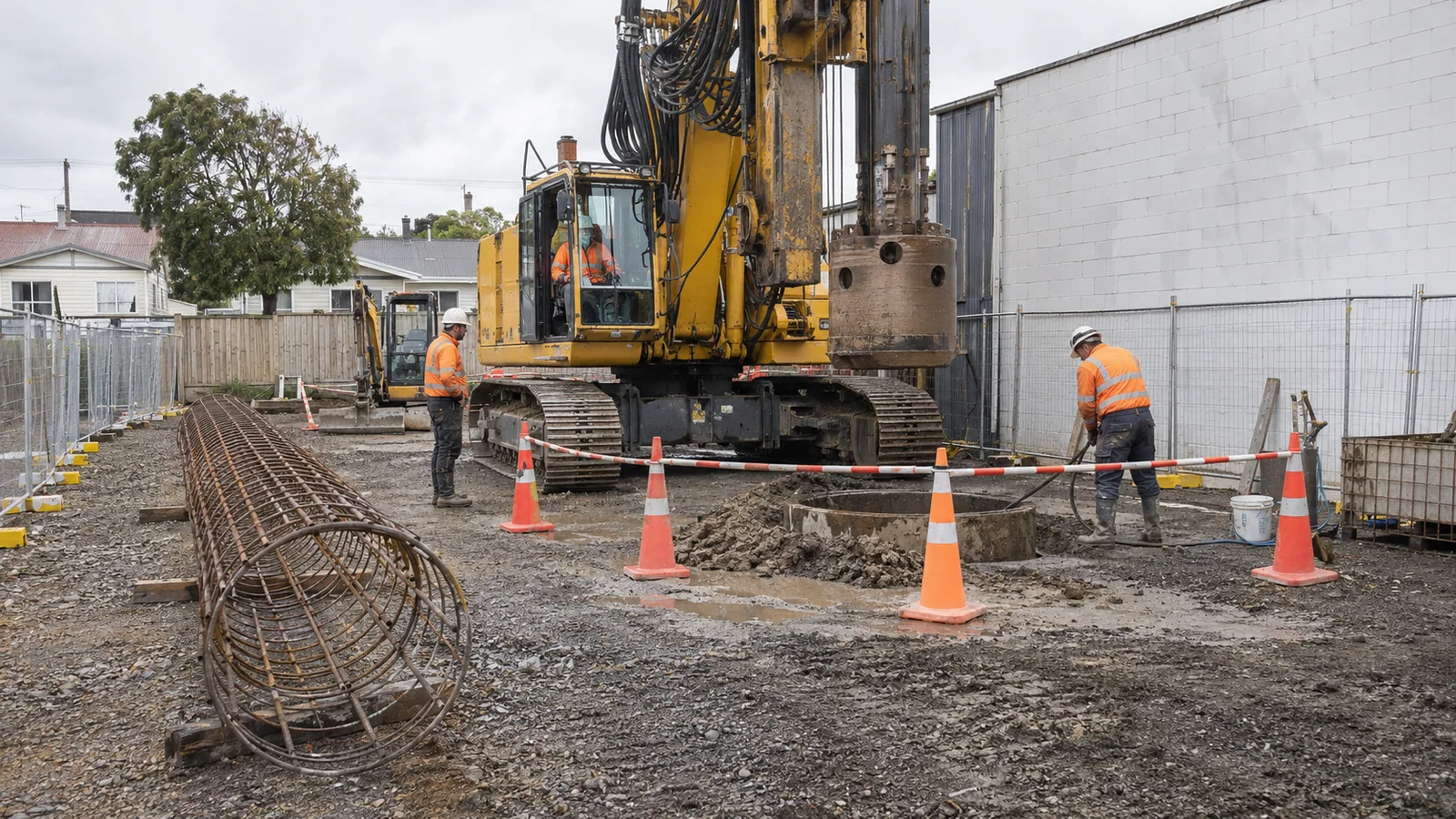
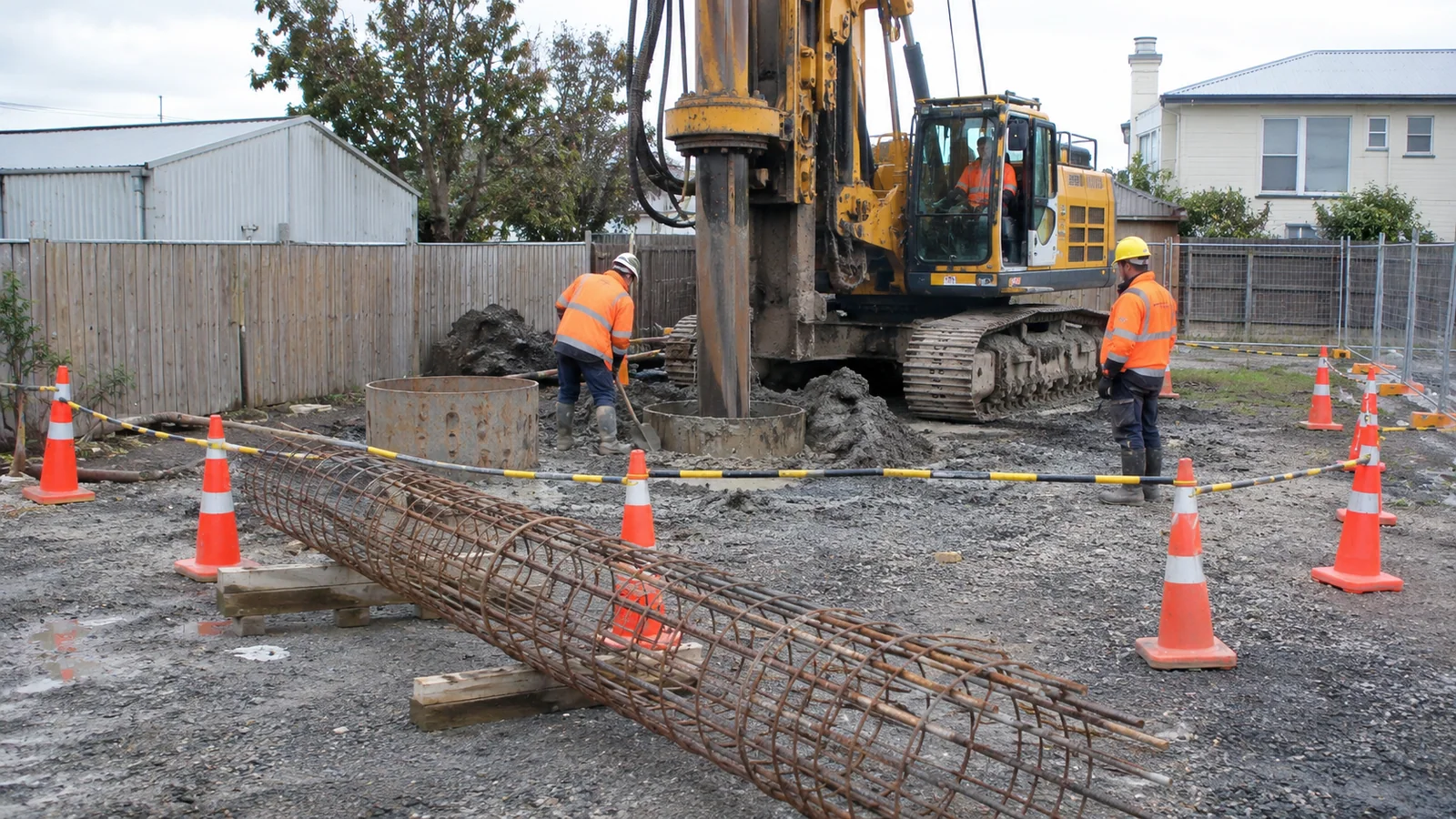
Bored and cast-in-place concrete piles built to your engineer's design, with thorough records, close geotechnical coordination and safe, organised site controls that give your structure a dependable foundation for decades.
Get A Free Concrete Piles EstimateDepths, concrete volumes and ground conditions documented for every pile.
Close coordination with geotechnical engineers on soft, sloping or variable Dunedin soils.
Exclusion zones, services checks and plant controls on every piling site.
Piles are used where the ground near the surface cannot safely carry a structure, transferring loads down to deeper, more stable material. That makes them highly dependent on site conditions, and Dunedin's variable ground means pile depths can differ widely from one site to the next. Piling also involves drilling, reinforcement cages and continuous concrete placement, all of which need careful control. Engineer design, geotechnical input and detailed records are standard. This section outlines the typical diameter, depth, concrete, reinforcement and consent requirements for concrete piles in Dunedin, giving you a practical overview before you commit to a foundation approach.
Bored piles are commonly 450 to 900 millimetres in diameter, with depth set by your engineer to reach competent ground, so lengths vary widely across Dunedin.
Piles use workable, high-strength concrete placed continuously with reinforcement cages designed to NZS 3101, with cover, spacers and tremie placement where groundwater is present to prevent segregation.
Piling requires building consent with engineer design, geotechnical input and records of depths, volumes and founding conditions, plus WorkSafe controls for drilling, exclusion zones and underground services.
Helpful guidance for planning a durable concrete project in Dunedin.
Depth varies because Dunedin ground differs from one site to the next. Your engineer sets each pile's depth so it reaches competent ground that can carry the load, using geotechnical information. Bored piles are commonly 450 to 900 millimetres in diameter, and actual lengths are confirmed during drilling and recorded.
Piles are used where the ground near the surface cannot safely carry the structure, such as soft, filled or steeply sloping ground. They transfer the load down to deeper, more stable material. Your engineer assesses the geotechnical information and decides whether piles or a shallower foundation system is more appropriate.
Piling usually needs building consent with engineer design, and records are kept of pile depths, concrete volumes and the founding conditions found during drilling. These records also support the consent documentation and show each pile was built as designed. Your engineer may also inspect reinforcement cages before concrete is placed.
Groundwater in a bored hole can wash out or weaken fresh concrete. Where water is present, concrete is placed through a tremie pipe so it does not segregate, and the reinforcement cage is held in position with spacers. Continuous placement is important, so planning for water before drilling begins helps.
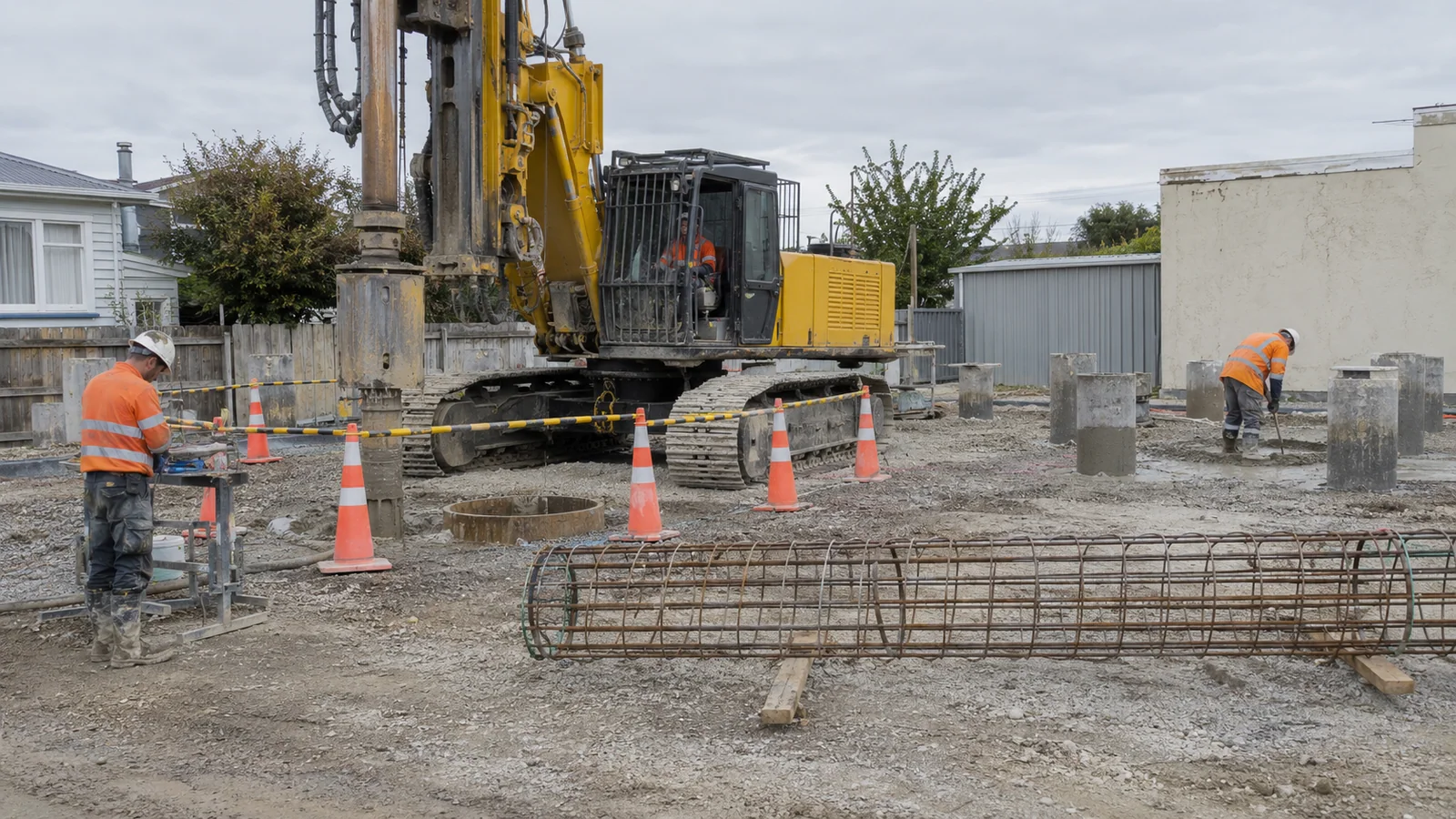
Tell us about your project and our local Dunedin team will come back with practical advice, clear pricing and a free, no-obligation quote, so you can move forward with confidence.
Get A Free Estimate