Stormwater Pits and Inlets
Precast and cast-in-place stormwater pits, inlets and junction pits formed accurately and sealed properly, giving your drainage system dependable access, inspection points and reliable, watertight connections.
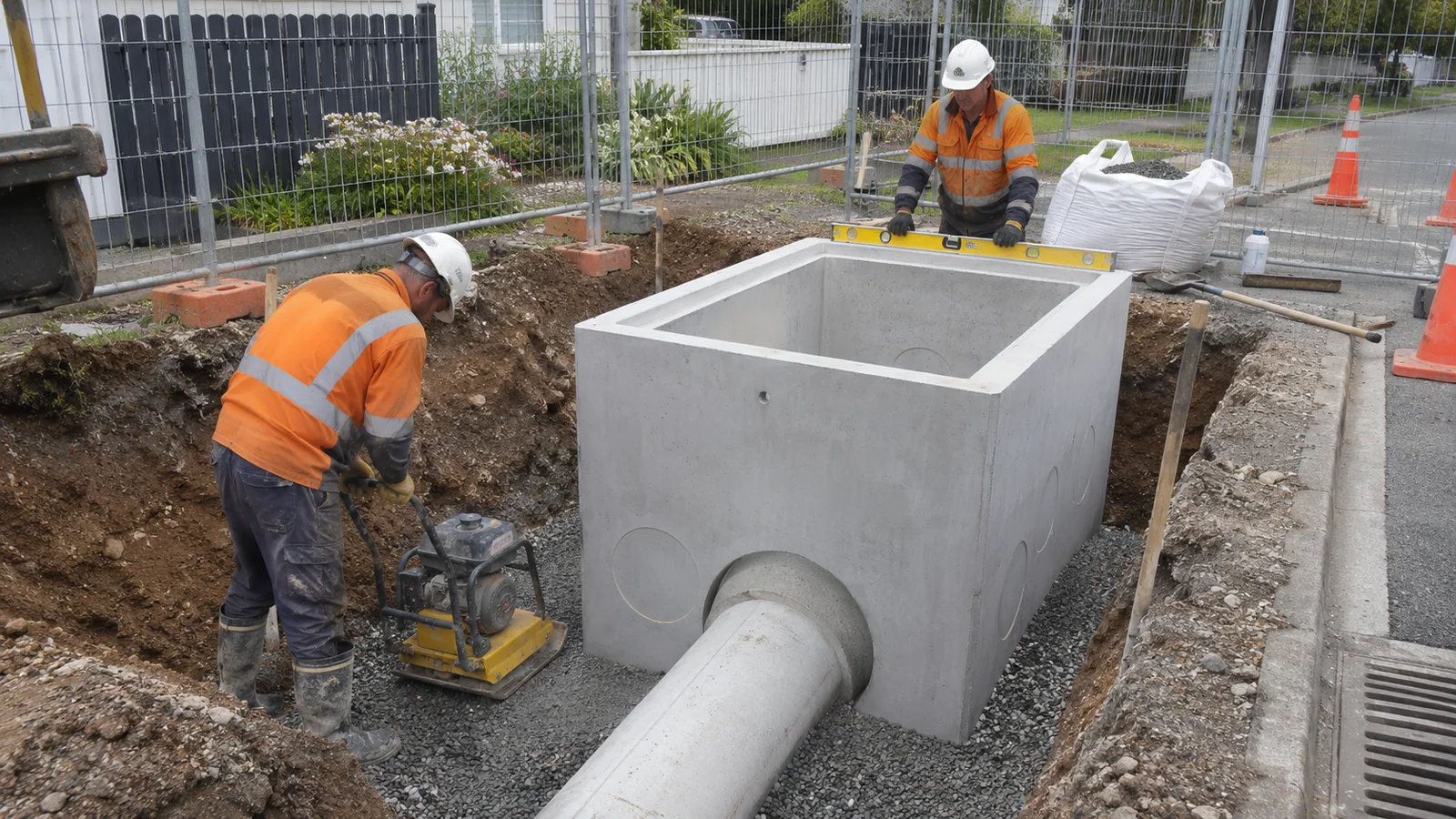
Cast-in-place and precast concrete pits for stormwater, services and inspection access.
Concrete pits in Dunedin are essential parts of stormwater and service networks, providing access, inspection points and connections where pipes change direction, join or enter council systems. We build and install precast and cast-in-place pits, including stormwater inlets, junction pits, manholes and kerb inlets, to your engineer's design and council standards. Accurate levels, sealed joints, correct benching and well-fitted lids all affect performance and safety.
In Dunedin's wet climate, a poorly built pit can quickly cause ponding, blockages or ground movement around it. Our team coordinates excavation, bedding, backfill and reinstatement, and we arrange inspections before pits are covered. We take care with traffic management and site safety, keeping neighbours protected and your project fully compliant and moving forward.
With tidy workmanship and thorough records, we deliver durable pits that keep your drainage system working reliably and simple to maintain.
Precast and cast-in-place stormwater pits, inlets and junction pits formed accurately and sealed properly, giving your drainage system dependable access, inspection points and reliable, watertight connections.
Side-entry pits and kerb inlets built to capture surface runoff from roads, car parks and hardstands, preventing ponding and protecting your pavements and nearby buildings.
Concrete-surround trench drains and grated channels for yards, loading areas, car parks and building entrances, collecting surface water more quickly and handling heavy vehicle loads where required.
Manholes and access chambers constructed or installed for stormwater and service networks, with correct benching, lids and levels for safe inspection, cleaning and ongoing long-term maintenance.
Concrete sumps, silt traps and treatment pits that capture sediment and debris, protecting downstream drainage systems and helping your project meet council, consent and environmental requirements.
Rebuilding, resealing and level adjustment of damaged, blocked or settled pits and lids, restoring drainage performance, safety and appearance around roads, car parks and commercial sites.
Pits are small structures with a big influence on how well a drainage system works. We build and install stormwater inlets, junction pits, manholes and kerb inlets to your engineer's design and council standards, with accurate levels, sealed joints and correctly fitted lids. In Dunedin's wet climate, a poorly built pit can quickly cause ponding, blockages or ground movement, so workmanship matters. Our team coordinates excavation, bedding, backfill and reinstatement, and arranges inspections before pits are covered. We stand behind every pit we build. You receive durable, tidy pits that keep your system reliable and easy to maintain.
Get A Free Estimate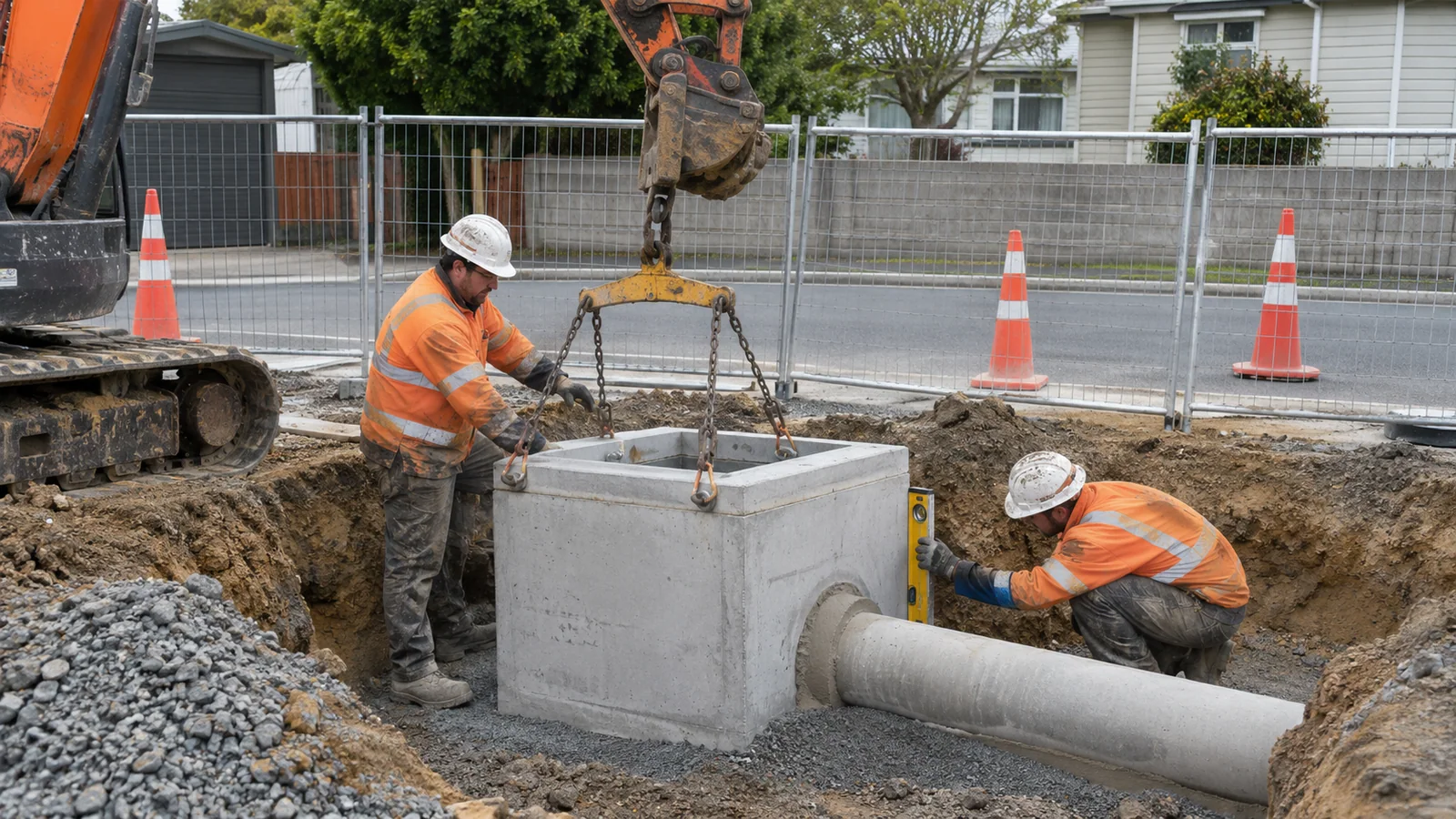
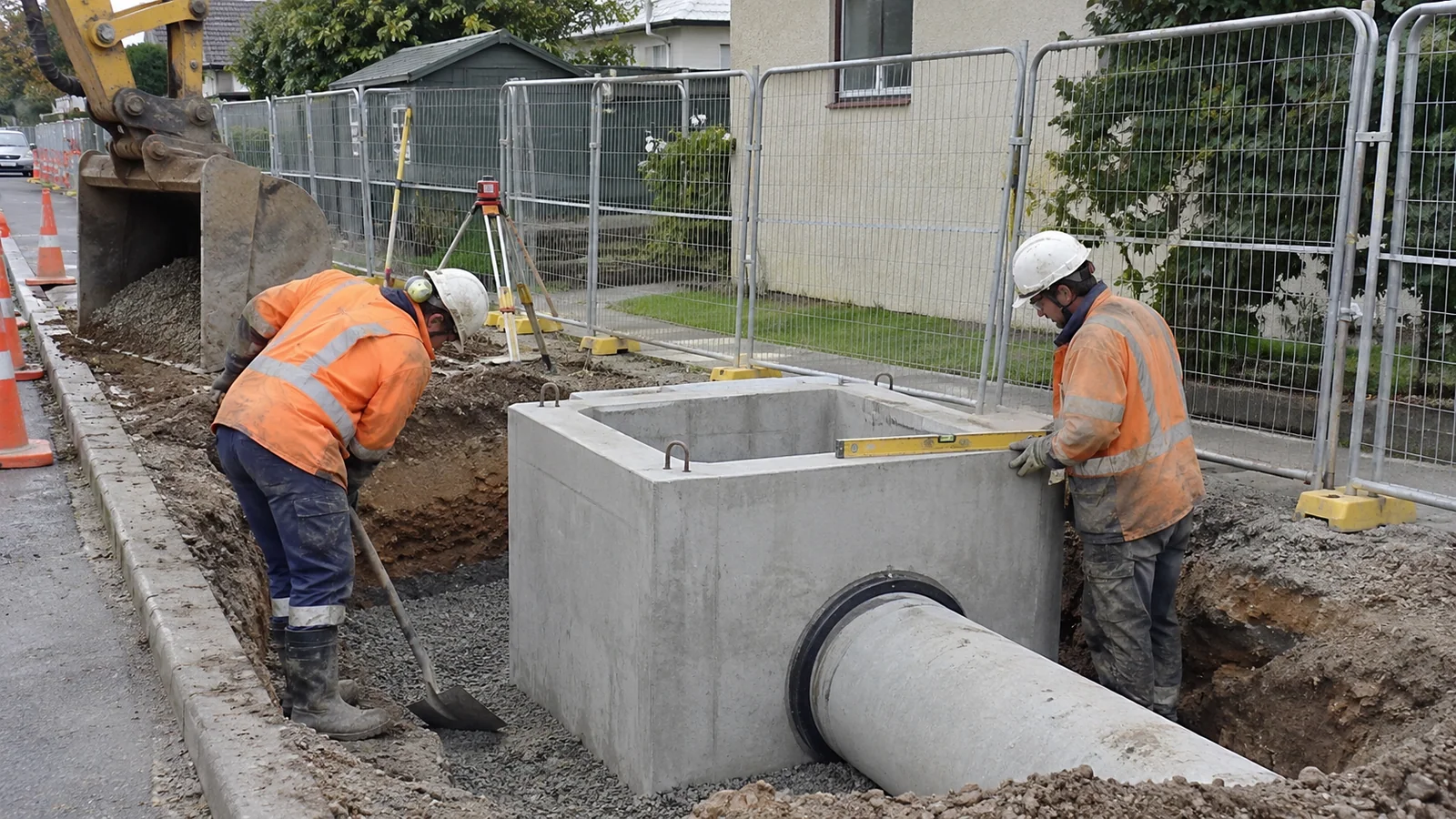
Precast and cast-in-place concrete stormwater pits with accurate levels, sealed joints, correct benching and secure lids, built to keep your drainage system reliable, accessible and easy to maintain for years.
Get A Free Concrete Pits EstimatePit inverts, benching and lid levels set accurately so water flows as designed.
Quality joints and precast or cast-in-place construction that resist leaks and movement.
Properly fitted lids and chambers that allow inspection and cleaning.
Concrete pits give you access to stormwater and service lines, collecting water, allowing inspection and making maintenance possible years after installation. Their size, depth and lid rating follow engineered drawings and council standards, and they may be precast or cast in place. Sealed joints, benching and step irons all affect how well a pit works over time. Pits connected to public networks need approval and inspection before they are backfilled. This section outlines the typical dimension, concrete, joint and council requirements for concrete pits in Dunedin, so you can see how these small but important structures are specified and checked.
Pit sizes, depths and lid dimensions follow engineered drawings and council standards, with sizes set for access, inspection and pipe connections, using precast or cast-in-place concrete.
Pits typically use 25 to 32 megapascal reinforced concrete with sealed joints, benching and step irons where needed, and heavy-duty lids rated for traffic or pedestrian loads.
Pits connected to the public network need council approval and inspection before backfill, with levels, covers and as-built records confirmed, and sediment controls considered to protect downstream drains.
Helpful guidance for planning a durable concrete project in Dunedin.
Both are used. Precast pits arrive made to size, so installation is typically quicker, while cast-in-place pits suit unusual shapes, depths or awkward connections. The engineered drawings and council standards usually guide the choice, along with access for lifting equipment and how many pipes connect to the pit on site.
Benching is the shaped concrete floor that guides flow smoothly between pipes, helping prevent sediment and debris collecting. Step irons give maintenance workers a safe way in and out of deeper pits. Both are included where the design calls for them, along with sealed joints to keep the pit watertight.
Yes, lids must be rated for the loads they will actually carry. Heavy-duty lids suit areas with vehicles, while lighter pedestrian-rated lids suit footpaths and gardens. The rating, size and position are shown on the drawings, so the wrong lid in a driveway or car park can fail as well.
Pits connected to the public network need council approval and inspection before backfilling. Levels, covers and as-built records are confirmed at that stage, and sediment controls may be considered to protect downstream drains. Booking the inspection before covering the pit avoids having to dig it up again at all later.
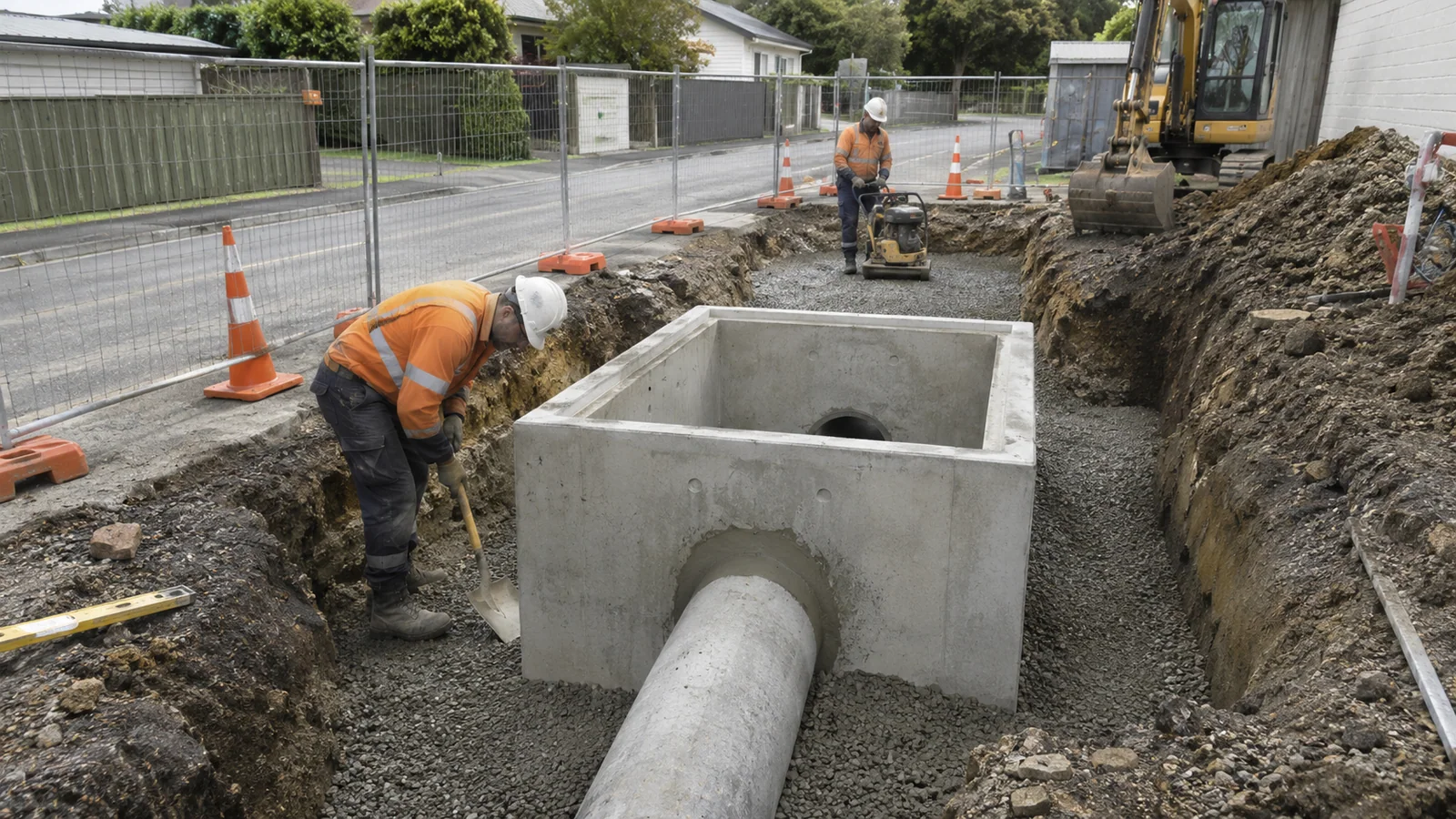
Tell us about your project and our local Dunedin team will come back with practical advice, clear pricing and a free, no-obligation quote, so you can move forward with confidence.
Get A Free Estimate