Industrial Estate Roads
Heavy-duty concrete roads for estates, depots and logistics precincts that carry constant truck traffic, resisting rutting, deformation and the maintenance headaches common with many other pavement types.
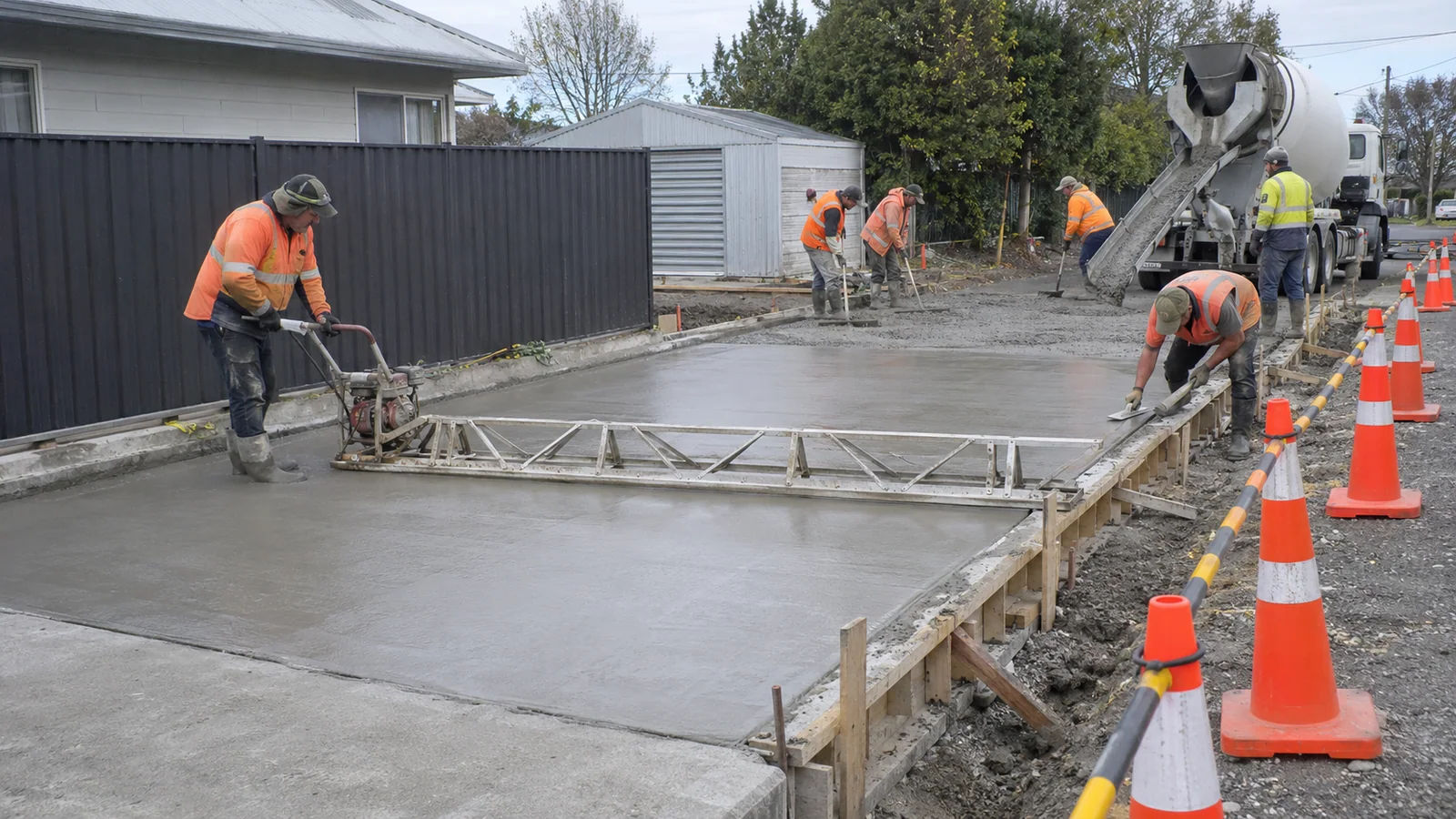
Concrete road construction for private roads, access ways and industrial sites that need a long-wearing surface.
Concrete roads in Dunedin offer exceptional durability for industrial estates, subdivisions, depots and private access, particularly where heavy vehicles and wet, freezing weather would quickly damage lighter pavements. We build concrete roads to engineered designs, with strong subgrade preparation, accurate levels, reinforcement and carefully planned joints. Good drainage and base construction are essential, so we manage compaction, testing and falls before any concrete is placed.
Our crews coordinate with councils, engineers and traffic management providers, keeping work safe and compliant near live traffic. Finished surfaces are textured for traction, and line marking can be coordinated on completion. We provide test results and records, so engineers and councils can approve it without delay.
Concrete roads need less maintenance than many alternatives over their lifetime, giving owners and developers a strong, long-lasting pavement that performs under heavy loads in demanding Otago conditions.
Heavy-duty concrete roads for estates, depots and logistics precincts that carry constant truck traffic, resisting rutting, deformation and the maintenance headaches common with many other pavement types.
Concrete street construction that integrates with kerbing, drainage and services, delivering long-lasting roads for developments that meet council standards and give owners much lower life-cycle costs.
Strong, durable concrete access roads for commercial sites, quarries and rural properties, built to suit your vehicle loads and designed for long service with minimal ongoing repairs.
Concrete roads and accessways built for Dunedin's steep gradients, with good traction, controlled drainage and strong pavement thickness that resists slippage, erosion and heavy braking forces.
Dowelled and tied joints, reinforcement and textured surfaces that control cracking, transfer loads and provide traction, keeping your concrete road smooth, safe and structurally sound.
Panel replacement, crack repair and reinstatement of damaged concrete roads and trench cuts, restoring strength and surface quality while keeping access open for traffic wherever possible.
Concrete roads perform for decades when every layer is built to design. We construct roads for industrial estates, subdivisions and private access, with strong subgrade preparation, accurate levels, reinforcement and carefully planned joints. Dunedin's steep gradients, heavy rain and frost make drainage and traction especially important, so we plan them early. Our crews coordinate with councils, engineers and traffic management providers, working safely near live traffic. We stand behind every road we build, with clear communication from start to finish. Testing, hold-point records and as-built information are provided, helping you gain approval and deliver a durable road with lower long-term maintenance.
Get A Free Estimate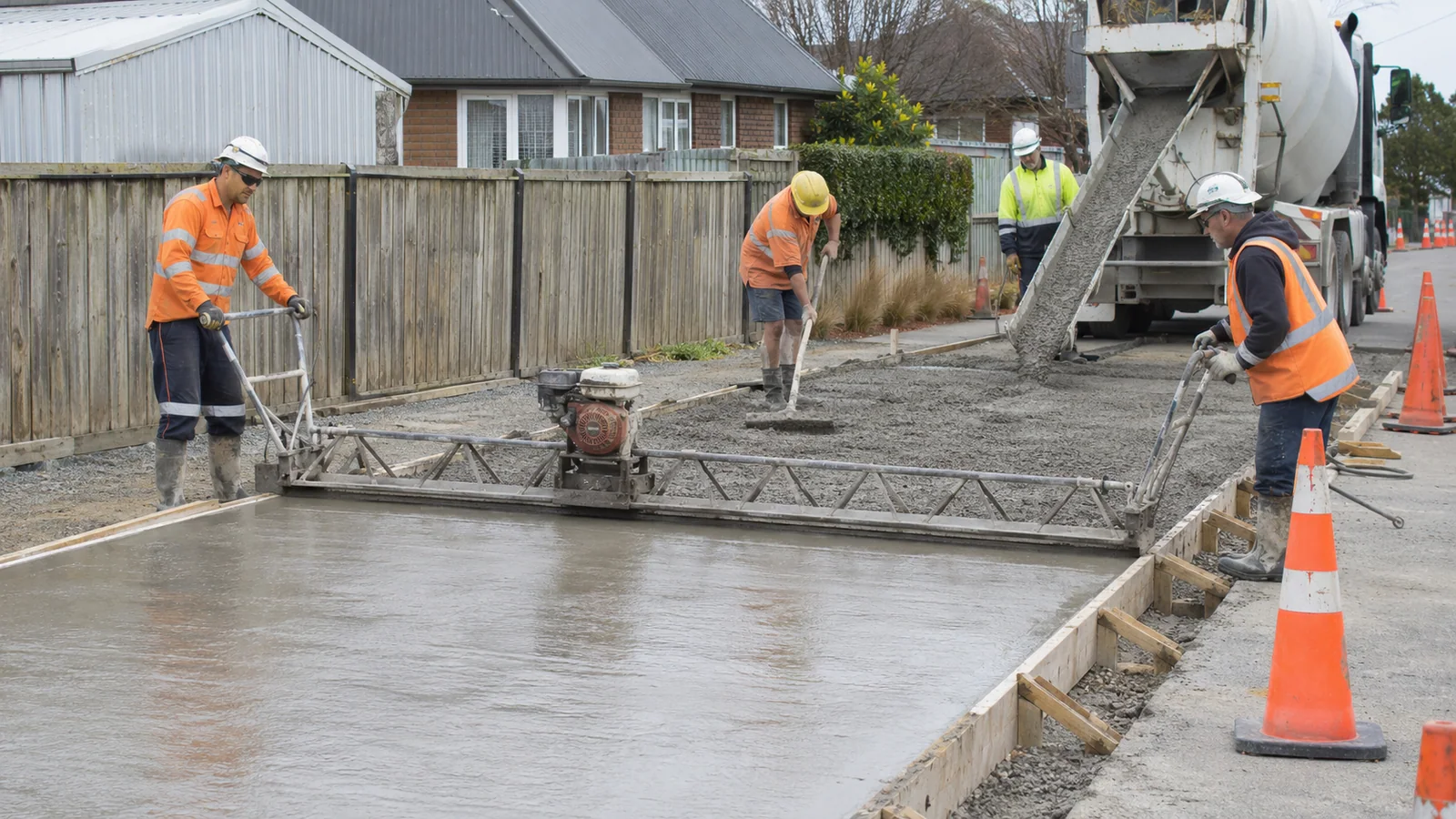
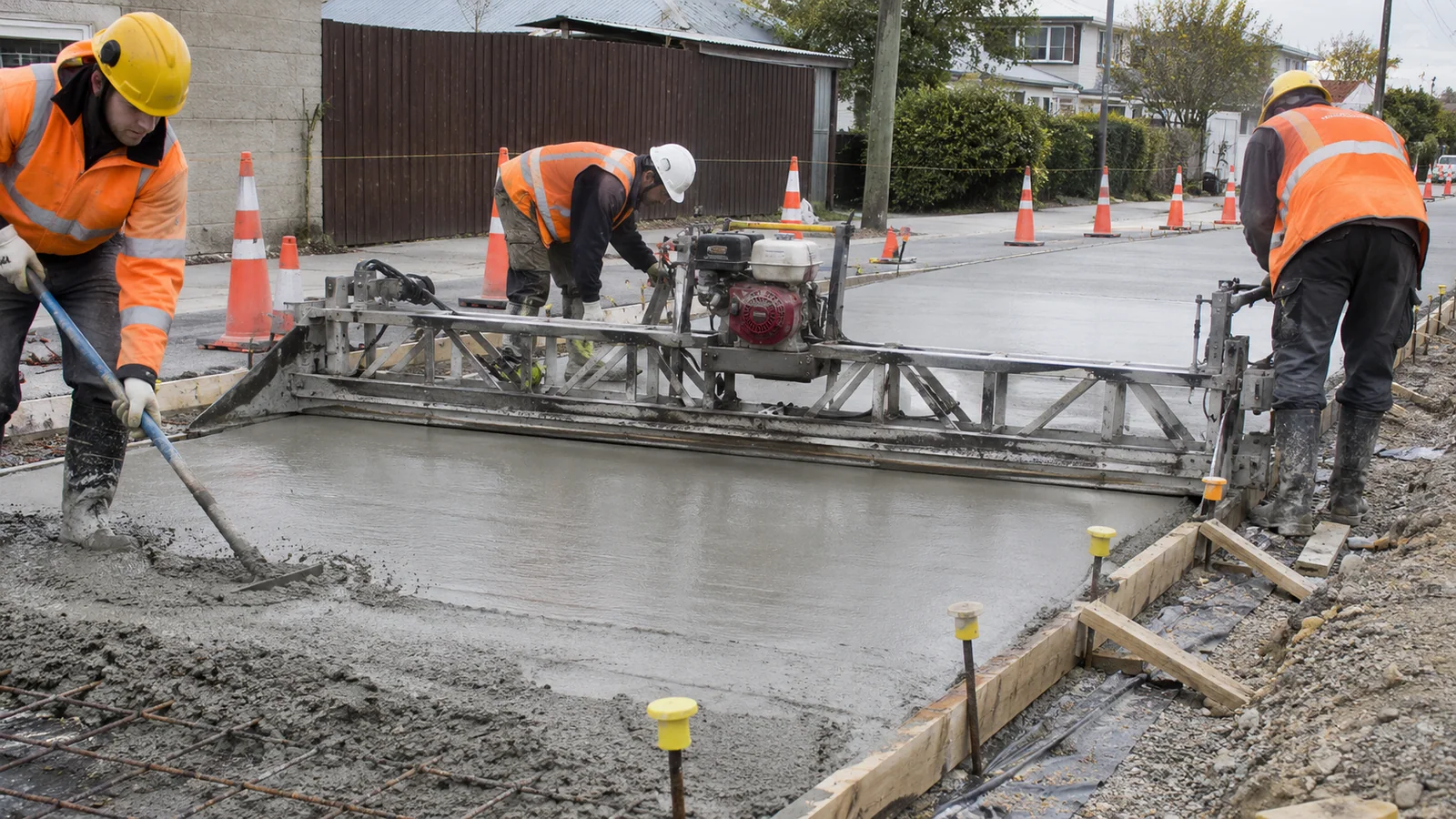
Heavy-duty concrete roads for industrial estates, depots and private access, built on compacted, tested bases with planned joints and strong reinforcement for decades of reliable, low-maintenance performance under heavy traffic.
Get A Free Concrete Roads EstimateStrong pavements that resist rutting, deformation and truck loading.
Subgrade and base courses compacted and tested before concrete is placed.
Work planned carefully around live traffic and neighbouring sites.
A concrete road has to carry repeated heavy loads for many years, so its design starts with traffic and the strength of the ground underneath. Slab thickness, joint layout and reinforcement are all chosen to control cracking and transfer loads smoothly from one panel to the next. Ownership of the road also affects which approvals apply, from council to national agencies. Testing and records are standard parts of delivery. The requirements below explain the typical thickness, mix, joint and approval considerations for concrete roads in Dunedin, helping private owners and developers plan long-lasting pavements with fewer surprises.
Concrete road thickness depends on traffic and subgrade strength, with heavy-duty roads commonly 200 to 250 millimetres thick over a compacted base, as set by your engineer's design.
Roads typically use 32 megapascal or higher concrete, with dowelled joints, tie bars and sealed joints designed to control cracking, transfer load and limit water entry.
Roads need council or NZTA approval depending on ownership, with construction to the code of subdivision and development, traffic management plans, testing records and as-built information.
Helpful guidance for planning a durable concrete project in Dunedin.
Thickness depends on expected traffic and the strength of the ground underneath. Heavy-duty roads are commonly 200 to 250 millimetres thick over a compacted base, but your engineer's design sets the final figure. Lighter private access ways may need less, while heavier industrial loading can need more for your project.
Concrete shrinks and moves, so joints are placed to control where cracks form. Dowels and tie bars transfer load smoothly from one panel to the next, and sealed joints limit water entry. Together they help a road carry repeated heavy vehicles without panels slumping or breaking over its whole life.
It depends on who owns the road. Council or NZTA approval applies to roads under their control, built to the code of subdivision and development with traffic management, testing records and as-built information. Private roads and industrial access ways still benefit from an engineer's design and documented testing as well.
Concrete is chosen where long wear is the priority, such as heavy trucks, turning areas or industrial yards. Its rigid slab spreads loads and resists rutting and fuel or oil damage. It usually costs more upfront, so the decision depends on traffic, budget and expected lifespan for your particular site.
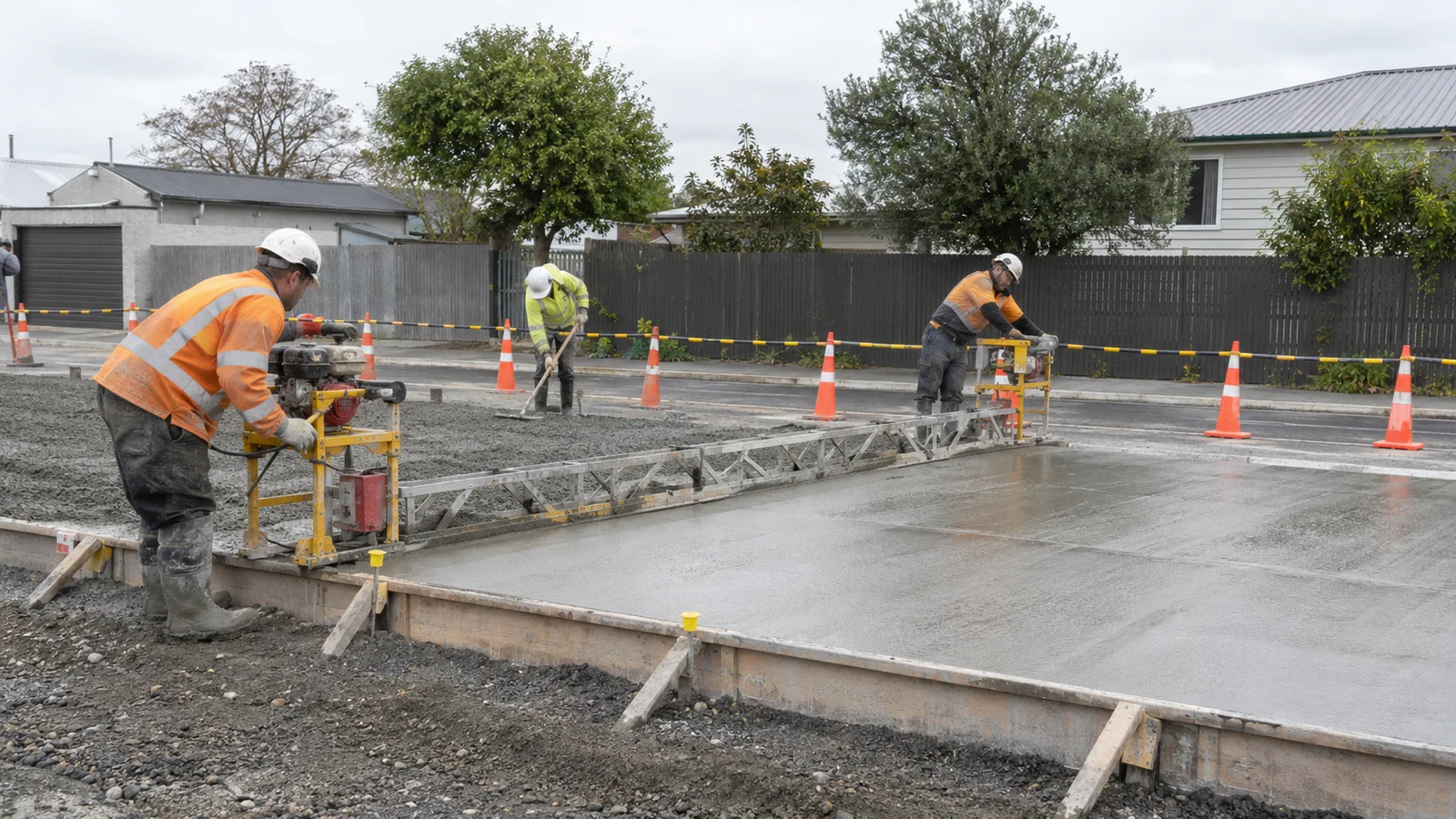
Tell us about your project and our local Dunedin team will come back with practical advice, clear pricing and a free, no-obligation quote, so you can move forward with confidence.
Get A Free Estimate